Friday, March 8, 2013

A Tsunami Survival Story, a Bio on Dennis Hopper, a Memoir from Sandra Day O'Conner, an Oral History of the Oak Ridge Gals, and a Last-Minute Reminder for Mohsin Hamid.

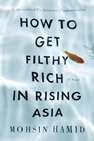
Are we all psyched about Mohsin Hamid's visit to Boswell tonight? Yes, we are. How to Get Filthy Rich in Rising Asia (Riverhead) is getting amazing attention. The Journal Sentinel review from Jim Higgins notes:

"How to Get Filthy Rich would be an interesting literary novelty if it were only a satire, but Hamid does much more here. In his succinct, deft prose and episodic chapters, he unfolds the life stories of the man and his true love, also unnamed but described as 'the pretty girl.' Fueled by their ambitions, they are not destined to marry each other, but their connection lasts through their lifetimes. Beyond their determination, she has only her looks and he only his intelligence, but both do achieve a state of being 'filthy rich,' at least for a time."

And I only need to quote one line from Michiko Kakutani in The New York Times. "It is a measure of Mr. Hamid’s audacious talents that he manages to make his protagonist’s story work on so many levels." Audacious indeed. It is one of those rare novels that speaks equally to the head and the heart. See you tonight.

It's already Friday and I haven't even mentioned any new releases this week. That's ok, as I saw some interesting books in new and noteworthy that we're completely new, but as they say, if you don't know about them, they are new. Any bookseller who has spent more than a couple of days on the floor will have had a customer come up and ask them about a "new" book that, when you figure out what it is, turned out to be five years old.

Jason saw Sonali Deraniyagala's Wave (Knopf) on my desk and almost mourned about how sad it is. It's about the 2004 tsunami and one woman who lost her parents, her husband, and her two young sons. This also got a daily New York Times review from Dwight Garner, who observed that "a form of greatness reverberates from her simple and supple prose here." And Lynn Neary wrote about the book for NPR.You really experience the tragedy first hand. Devastating.

A change of pace is Tom Folsom's biography of Dennis Hopper, known simply as Hopper (It Books). Hopper's had a storied career, from (from the cover copy) the chopper-riding outlaw of Easy Rider to the prophetic madman in Apocalypse Now to the terrifying psychopath in Blue Velvet. Come to think of it, they are all pretty terrifying. Tom Folsom is a documentary filmmaker and also wrote a book called The Mad Ones, which was about a guy who took on the Cosa Nostra (New York mafia). 

The biographer/historian Douglas Brinkley called Hopper "an electiric and rollicking tour de force profile of Hollywood's great outlaw chameleon. And here's a nice column in the Huffington Post about how Folsom came to write the book. And here's an interview from Jeffrey Trachtenberg in The Wall Street Journal.

Despite her movie career fizzling, Sandra Day O'Connor wound up with a fine backup career as the first woman Supreme Court Justice*. Her new memoir Out of Order: Stories from the History of the Supreme Court (Random House) focuses on her life on the bench and it's also gotten some fine pre-publication attention. Walter Isaacson, Jon Meacham, Evan Thomas, Gordon Wood, and Annette Gordon-Reed all weigh in. They all say a variation of what Meacham said, that she's an "engaging historian" with "characteristic clear-eyed common sense."

Because this is not O'Connor's first book, it is not skyrocketing up the charts like Sonia Sotomayor. Kakutani in The New York Times notes "The reason to read Out of Order is to get Justice O’Connor’s succinct, snappy account of how today’s court — so powerful, so controversial and so frequently dissected by the media — evolved from such startlingly humble and uncertain beginnings that it initially seemed like a jerry-built enterprise constructed on entirely ad hoc principles" Here's a link to her appearance on The Daily Show with Jon Stewart. Jason said that this was a hilarious interview.

Finally there is another look at greatest generation women in The Girls of Atomic City: The Untold Story of The Women who Helped Win World War II (Touchstone), written by Denise Kiernan. Kiernan, who has written for The New York Times, The Wall Street Journal, Discover, and other publications, looks at the women of Oak Ridge, Tennessee, which, at the height of World War II, consumed more electricity than World War II. The things you can learn from jacket copy. Drawing on the voices of the women who lived it, Kiernan resurrects a forgotten chapter in American history, an important way station in the road to the atomic bomb.

I actually heard the story on Weekend Edition before coming across the book in the store. The women involved were so excited to help win the war, and the town was so filled with young workers that it was a fun place to be, filled with skating rinks and bowling alleys and other diversions fit for a 1940s era gal, and there was really no regrets at the time about helping build a devastating bomb. And our memories do need jump starting. I asked one bookseller she they knew of Oak Ridge and she (really) replied "Giddy up a oom papa oom papa mau mau." But that's a different chapter in the city's storied history.

*And yes, that is also made up. Who says I rely completely on jacket copy?


Thursday, March 7, 2013

John Elder Robison Returns to Boswell and This Time, We're Raising Cubby.

It’s not often when I read a memoir where the hero of a book is a school program, but after finishing Raising Cubby: A Father and Son’s Adventures with Asperger’s Trains Tractors, and High Explosives (on sale Tuesday, March 12), I was ready to give three cheers for the Montessori program. It’s what got John Elder Robison’s son on track with his schooling, and it probably saved him.

Now I should note that folks who read Robison’s new memoir will note that both father and mother (known affectionately as Little Bear) accomplished amazing things on their parenting journey. I should also note here that everyone involved was eventually diagnosed with Asperger’s, though for most of the story, nobody had that label.

It turns out the Montessori method was just the thing to help a long a kid with very specific interests who also had learning issues. I’m not sure what this is diagnosed as, but Cubby also had problems copy written diagrams, though he could follow oral directions quite well. It led to a kid who would get some test results as being way above normal and others where he was failing.

It made me glad to know that what happened with the Robisons might have been somewhat averted in Milwaukee. It turns out that Milwaukee doesn’t only have private Montessori Academies, but also has the largest public Montessori program of any school system. According to FOB Jenni, about 10% of MPS students are educated using Montessori techniques. I’m not sure Robison knew that before, but he should now, as I let his publicist know.

Robison’s already written two books, Look me in the Eye is the memoir of his own upbringing, touched on in his brother Augusten Burrough’s own memoir, Running with Scissors. He has also written a book of essays, Be Different, an advice book that offers anecdotes and coping strategies. We already know from his appearance last March that the next book will be looking at the science behind these diagnoses. And I know that there’s been a lot of hoopla about DSM folding Asperger’s into Autism, so there might be a little about that too.

Before Mr. Robison’s appearance, Cubby made national news when The New York Times ran a profile on the family, including the story about how Cubby was charged for his experiments with explosives. As you may have heard, the DA at the time, who gets no love in Raising Cubby, compared him to a terrorist. I won’t go into that part of the story that much here, as like a juicy thriller, memoir culminates some courtroom melodrama, and I don’t want to spoil it for anyone.

But most of the book is about a different-ish parent coping with a different-ish child, sometimes funny, sometimes poignant, sometimes amazing. Once again, we’re co-sponsoring our event with Autism Speaks, but this time we’re doing it a bit differently. Instead of ticketing the store, we’re going to donate a percentage of designated sales for the night to Austism Speaks, and that will include all sales of the new book. Just let us know at the register.

More on Autism Speaks. Their big fundraiser is their annual walk (it's called "Walk Now for Autism Speaks")  is held on April 6 at the Bradley Center. There is no problem with bad weather for their fundraiser, as the walk actually happens inside the Bradley Center, on the 2nd, 3rd, and 4th levels. The 4th level is the "quiet floor" for folks who have to deal with sensory overload.

The festivities start at 9 am with various fun and informational activities and booths. The opening ceremonies are at 11, and folks start walking the Center until 1 pm. You can also get discounted tickets to the Milwaukee Bucks game that night at 7:30. Do you want more information? Of course you do. Here's the link.

I had such a great time at the last event, and I particularly enjoyed meeting so many of the families that came to share John’s story. Now it’s time to share Cubby’s story too. Here’s hoping you will join us at Boswell for this wonderful and inspiring event on Wednesday, March 13, at 7 pm.

Wednesday, March 6, 2013

New Event Flier and Other Ways to Talk Up Some Upcoming Events.

It's been a busy week! Our new events flier is in (thanks Stacie), featuring events going all the way out to May. Not all of them are listed, of course, as I'm still booking May events. But there's lots of things you haven't seen before, like Dean Strang's Worse than the Devil (on the Milwaukee police station bombing of 1917) on April 5, Lee Sandlin's Storm Kings on April 11 (on tornado chasers) and fiction from Cara Black, Christina Schwarz and more. We've also got events at the Lynden Sculpture Garden, Open MiKE (that's the same author--Forbes.com blogger Jessica Hagy on How to Be Interesting in Ten Simple Steps), and the Great Lakes Distillery (Amy Stewart for The Drunken Botanist). Oh, and some high-profile ticketed events from Michael Pollan, Anne Lamott, and Elinor Lipman.

Many of these events have also made it to our upcoming events page.

So here's the thing. We know you follow our blog and email newsletter and Facebook page and upcoming events page on our website, or some combination thereof. But there are lots of unwired folks out there who need the flier, and there are wired folks who need the flier too, because otherwise the data gets lost among 700 other emails or posts or whatever. Goodness, we had one customer that lives too far away from the store to pick up a flier, and can only find out about events that get listed in the print version of the Journal Sentinel. Alas, we simply don't have the money or resources to mail out newsletters like many stores did once upon a time. So my only solution is to be good to your non-wired friends and take a copy of the event calendar next time you're at Boswell and give one to them.

Yes, that's a lot of events. And while we have all sorts of partnerships going on, and hope to get all kinds of publicity, and there are a lot of events that will become successes based on marketing to our customer base alone (email newsletter, Facebook word of mouth, and so forth), I am feeling the pressure to do some ads to promote a bit more. Have I done everything possible to make this author visit worthwhile to the publisher? These are the kinds of things you worry about as publishers continue to evaluate old-fashioned touring.

We're highlighting several events in a Shepherd Express ad that goes on sale today (Mohsin Hamid on Friday, John Elder Robinson on March 13, Elaine Pagels on March 20, Aleksandar Hemon on March 21, and a first announcement for Anne Lamott on April 6). In addition, we have a dedicated ad in the Journal Sentinel for Blue Balliett this Sunday. Her event is March 12 at the Loos Room of the Milwaukee Public Library.

Plus we've got some underwriting going on. So say you're reading this and you're wondering why I'm not advertising with you. I should let you know up front that for the most part, we only advertise in venues that offer dedicated book coverage, so that means no commercial radio and television. All our ads are event driven, so you need to be timed right, and match the demographic for the event. A lot of our friends at other commercial bookstores don't do any advertising at all, relying completely on social media and targeted marketing to their customers, but at least while there is dedicated book coverage, I'd like to support those operations.

So three ads later, I'm coming up for air, just in time to work on our next email newsletter.

Tuesday, March 5, 2013

Jonah Berger Pinpoints What Makes Ideas Viral in "Contagious."

Last week I spoke about the concept of big ideas, and the writers that conceptualize them. Malcolm Gladwell first popularized this with The Tipping Point, and the Heath Brothers took it to the next level with Made to Stick.

So now Jonah Berger has written Contagious: Why Things Catch On, which is out today. Mentored by none other than Chip Heath himself, Berger tries to deconstruct viral ideas down to their component parts. It turns out that, to Berger, there are six such factors, which he has turned into the acronym STEPPS. The are social currency (how does sharing this idea make you look, triggers (how often do the components of the idea enter the consciousness), emotion (high arousal is better), public (meaning behavior as opposed to thought), practical value (does sharing the idea help someone) and stories (we like ‘em).

So here’s the thing. I’ve been reading these kinds of books in the dark for the last few years, as there has been nobody I’ve worked with at Boswell who likes them. As a result, I find myself reading a lot fewer of them than when I was at Schwartz. I think that actually falls under the “trigger” category. But now it turns out that Hannah loves these kinds of books, and so my incentive to read this was to share the ideas and tell her if it was worth reading.

And of course like all these books, I’m hoping to improve my own business at Boswell. What kind of messages are we sending out? Do we have a consistent message? Is it memorable? There’s nothing like a book like this to get you to do some serious thinking. Like many folks, I figure if I come up with one or two ideas that are successfully implemented, it will have been all worth it.

Social currency—for our customers, being well read is still seen as a plus, though it has been noted that an intellectual is no longer required to read the novel of the moment to keep his or her credentials.

Triggers—Boswell is lucky enough to get a lot of traction in local and even national media. My hope is that this gets folks to come in the store who might not otherwise.

Emotion—Oops! There’s a lot of contentment that goes with the store, which is a low arousal emotion. However, I think we’ve also had our share of humor and awe, which are more likely to help folks tell others about Boswell. There’s nothing like an amazing author event to connect with our customers. And while I think most of our interactions with customers are no different than most other indie retailers, every so often things will just go incredibly out of the ordinary in a good way, and that has a lot of currency. A funny display will sometimes help. Or maybe a simple but beautiful limited-edition shopping bag will do the trick. Department stores pulled that one off for years.

And if you don’t believe it has an effect, a really wonderful customer (and an author to boot) came back to tell me how much she loved, loved, loved Aaron’s bag. The bag was everything I wanted in a marketing symbol—retro modern, a celebration of art and books and yes, commerce.

Public—Reading is a such a private thing, except on public transportation. I’ve been known to read while I walk, such that there were a few jokers around town who used to call me “Books” when I ran into them, but that can be dangerous of course. One of the reasons that bookstores of all sorts sell book-related stuff is that we’re trying to make public the act of reading, such that our customers simultaneous show their identity and perhaps make it a little more palatable for the general public. I was just saying to Bob that our dream is to have a famous musician wearing a Boswell shirt in concert. He wore his at Summerfest last year, which is just the jump-start we need! Thanks, Bob.

Practical Value—I think there have been enough studies about reading to show that there are some good after effects. Do I even have to argue this one?

Stories—We’re not just talking about the stories in the books here, but the story about Boswell. The survival story seems to strike a note with a lot of folks and our customers seem to get into the idea that Milwaukee has a bookstore that is still sort of a local secret, and yet has national currency. It’s not quite on the level of the Please Don’t Tell bar that is touted in Contagious (I was certainly intrigued with that one) but we’re a bit off the beaten path and one of our volunteer gift wrappers at Christmas told me that she had moved to Milwaukee and still recalled the first time she stumbled on the store and the sense of awe she felt about the whole thing. Awe, that’s a high-arousal emotion. Yay!

I do have a concern that Contagious is a little short at 180 pages. I thought to myself, if I were writing or editing or publishing this book, I would have tried to stretch it to 240 pages. The next day, Hannah noted that if a book isn’t 260 pages, it starts feeling like a magazine article. I even came up for a formula-- thirty pages of introduction. Thirty pages for each of the STEPPS. Thirty pages for application, synthesis and conclusion.Why Hannah said 260 and not 250, I do not know. She's probably right though.

I should note that a good part of why read these books are for the stories. Yes, they might help us, but also I think these are the very sorts of high-arousal stories that would have us forward a newspaper article. But the problem is that there are only so many stories out there, and more and more, these books repeat the same studies.

This is something I hadn’t really thought about regarding books in the new world of instantaneous connection. The stories move so quickly and it is the currency of stories that drive these books. And worse than that, it’s the demand for constant new stories following publication, as every successful book of this sort warrants a blog. That’s something that is said to trip up Jonah Lehrer.

It strikes me that original research would be the solution to this problem, but for most researchers, their books would be rather one note. I recall reading Stanley Milgrim’s Obedience to Authority after declaring his study to be the most cited in modern American history. While there were fascinating details I hadn’t before learned, it was mostly variations on a theme.

Berger has several good stories and two great ones--the $100 cheesesteak at Prime Steakhouse in Philadelphia (Berger is a prof at Wharton) and the Blendtec blender with the “will it blend?” viral videos. But I wish there had been a few more of this sort.

We'll see if Contagious finds itself contagious with the reading public. I bet there’ll be at least one viral video.

Monday, March 4, 2013

This Week's Boswell Events--David Mulroy, Mohsin Hamid with Ghassan Zeineddine, Bobby Tanzilo at Lake Park Pavilion.

Do you watch our upcoming events page on the Boswell website? One thing we've noticed is that authors and publishers really do. It's the first place we find out that we made a booboo, like a starting time inconsistency. And they'll also remind us if they think an event is confirmed and I didn't do a follow up. So I highly recommend you bookmark this page.  Here are this week's events--we're hosting David Mulroy and Mohsin Hamid (pictured), plus we're selling books at Bobby Tanzilo's talk at the Water Tower neighborhood association. And I should note here that I'm using Stacie's copy rather liberally.

Thursday, March 7, 7 pm, at Boswell:
David Mulroy, translator of Sophocles's Antigone and Oedipus Rex

David Mulroy is professor of Classics at the University of Wisconsin–Milwaukee. He has translated The Complete Poetry of Catullus and Oedipus Rex, both published by the University of Wisconsin Press. I know at least a couple of you have asked for more speakers on the classics.

Sophocles's Antigone ranks with his Oedipus Rex as one of world literature's most compelling dramas. The action is taut, and the characters embody universal tensions: the conflict of youth with age, male with female, the state with the family. Plot and character come wrapped in exquisite language. Antagonists trade polished speeches, sardonic jibes, epigrammatic truisms, and break into song at the height of passion.

David Mulroy's verse translation of Antigone faithfully reproduces the literal meaning of Sophocles' words while also reflecting his verbal pyrotechnics. Using fluid iambic pentameters for the spoken passages and rhyming stanzas for the songs, it is true to the letter and the spirit of the great Greek original. The new edition also includes a detailed introduction and notes to help the reader find a clearer understanding and context for the play.

Friday March 8, at 7:00 pm, at Boswell:
Mohsin Hamid, author of How to Get Filthy Rich in Rising Asia, in conversation with creative writing doctoral student Ghassan Zeineddine, co-sponsored by the Eleventh Annual UWM Spring Writers Festival
Join us for a conversation with Mohsin Hamid, author of the award-winning and best-selling novels Moth Smoke and The Reluctant Fundamentalist. His hotly anticipated new novel, How to Get Filthy Rich in Rising Asia, tells the story of a young entrepreneur fighting to get from impoverished childhood to modern success. In his first two novels, Hamid established himself as a radically inventive storyteller and this one is no different.

“Told in the form of a self-help business manual, Hamid’s sometimes sharp edged but often beautiful third novel follows the life of an unnamed protagonist in a third world Asian nation. Starting with his first job delivering pirated movies, and continuing on with an entrepreneurial leap to counterfeit bottled water, our hero (always “you”, as the story is told in the second person), experiences the heightened expectations, followed by the setbacks that encompass most lives. But despite the failed marriage, the backstabbing associates, and the inevitable decline, there is always, lurking in the background, the pretty girl who had her own dreams and only intermittently and fleetingly entered his life.”—Daniel Goldin (Hey, that's me!)

"This brilliantly structured, deeply felt book is written with the confidence and bravura of a man born to write. Hamid is at the peak of his considerable powers here, and delivers a tightly paced, preternaturally wise book about a thoroughly likable, thoroughly troubled striver in the messiest, most chaotic ring of the global economy. Completely unforgettable." —Dave Eggers, author of A Hologram for the King

About the Author: Mohsin Hamid's first novel, Moth Smoke, was a finalist for the PEN/Hemingway Prize. The Reluctant Fundamentalist was shortlisted for the Man Booker Prize and the film version, directed by Mira Nair, is set to be released this year. Hamid contributes to Time, The New York Times, and The Washington Post, among others. He lives in Pakistan.

Ghassan Zeineddine is a doctoral student in Literature and Creative Writing at UWM. He is currently at work on his first novel, Mutanabi Street, set in Beirut in the 60s and 70s. I love books set on one street (or alternately, one apartment building. There's a blog post in there somewhere.)

On the fence about coming to see Mohsin Hamid? We're hosting him relatively early so you may not understand what a big deal this is. I'm going to list ten reasons why you should come.

1. Ron Charles talks about Hamid's use of the second-person and his borrowing of the self-help genre for the novel in this enthusiastic Washington Post review.

2. Though Hamid is deliberately vague about people and places, he has stated in this Salon essay that the place is most definitely a real place. "The novel is also acutely informed by modern life in Pakistan. The deliberate vagueness of the setting and the characters’ names – for example, the protagonist’s lifelong love interest is simply known as 'the pretty girl'--frees Hamid to 'write about Pakistan without being constrained by the stereotypes and assumptions that I’ve absorbed from reading other people writing about Pakistan.'"

3. We are apparently the go-to store for great writing about the Pakistani and Pakistani American experience. Did you attend our talks with Daniyal Muenuddin or Ayad Akhtar? They were great, right? And I'm already postive that this is also going to be amazing. As soon as his Glory and Jynne at Riverhead told me that Hamid focuses on talking instead of reading, I knew it was going to be great.

4. Ghassan is the perfect person to have this conversation style event. Trust me on this one.

5. Hamid got a special cell phone number for the tour, because we booksellers got a little nervous about calling an Islamabad number if he got lost on the way from his last event. Isn't that cool? Sometimes folks don't realize what publishers go through to make these events work. Feel guilty yet? I love guilt. Make it up to me by attending on Friday.

6. This is the preview event for the UWM Spring Writers Conference on Saturday, March 9. We'll be selling books there, and I'll also be in conversation with Paul Salsini and Julia Pandl about self-publishing. It's probably not too late to sign up. More info here.

6. Not convinced? Hamid is collecting more pieces about the book on his website. I particularly love that they got Jay McInerney, the former king of second person, to interview him for the Daily News.


And if you missed our event with Bobby Tanzilo talking about Historic Milwaukee Public Schoolhouses, don't forget that he is appearing this Wednesday at 7 pm as a guest speaker at the Water Tower Neighborhood Assocation meeting. Here's the Facebook page. They'll let you know if there are any changes to the schedule.

For my part, I'm happy that we don't have store events until Thursday. The weather should have calmed down by then.

Sunday, March 3, 2013

Sunday Bestseller Post--Harufs, Lamotts, Henkes, and More.

Hardcover fiction:
1. Benediction, by Kent Haruf
2. Gone Girl, by Gillian Flynn
3. Vampires in the Lemon Grove, by Karen Russell
4. Flight Behavior, by Barbara Kingsolver
5. Sweet Tooth, by Ian McEwan

Nobody seems to have forgotten about Kent Haruf, whose last book was 2004's Eventide. Reviews are coming in very strong for Benediction (Knopf), such as John Freeman's in the Boston Globe, who says "Thirty years since his first novel, The Tie That Binds, was published, the scope of Haruf’s work is coming into view. He is a novelist, like Marilynne Robinson, who strums the biblical chords of our self-myths."

Here's a very nice profile of Kent Haruf from Claire Kirch at Publisher's Weekly, who notes "Like the first four novels, it is set in fictional Holt County and delves, in spare, simple prose that many have compared to Ernest Hemingway’s, into the inevitably entwined lives of its rural inhabitants. Haruf considers William Faulkner as the author who perhaps has most influenced him, saying that he likes 'to read some Faulkner, Hemingway, or Chekhov before sitting down to write anything.'"

Hardcover nonfiction:
1. Europe and the Islamic World, co-written by John Tolan
2. Help Thanks Wow, by Anne Lamott
3. Bottoms Up, by Jim Draeger, Mark Speltz, Mark Fay
4. Lessons from the Heartland, by Barbara Miner
5. Hope Against Hope, by Sarah Carr

A flurry of events, past and future, rule this week's bestseller lists. Sarah Carr, former Milwaukee journalist, will be at Boswell to talk about her book about Hope Against Hope: Three Schools, One City, and the Struggle to Educate America's Children (Bloomsbury) on March 19, 7 pm, at Boswell, and again at Marquette on March 20 in the morning. And Barbara Miner has another event coming up too, at the ACLU's Bill of Rights celebration on March 23.

Looking out further ahead, tickets are almost reader for Anne Lamott's appearance on April 6, 7 pm, for the paperback of Some Assembly Required (Riverhead). Tickets are $15 and include a copy of Some Assembly Required or a $10 gift card. Thist time the event will be at Boswell. We're hoping to have the tickets on sale by Tuesday!

And here's a happy memory of John Tolan's event last Sunday.

Paperback fiction:
1. All This Talk of Love, by Christopher Castellani
2. City of Dark Magic, by Magnus Flyte
3. Wolf Hall, by Hilary Mantel
4. The Language of Flowers, by Vanessa Diffenbaugh
5. Canada, by Richard Ford

We've been lucky with snow storms affecting events this winter, but it wouldn't be Milwaukee without at least one weather issue. Our event with Castellani for All this Talk of Love  went on as planned, but being one day after one of the larger snowfalls of the winter, with a very icy landscape, we heard from a number of customers afterwards that they wanted to come but had to send their regrets. That said, the folks who came were enthusiastic, and one of the things I've noticed is that a person who braves adverse conditions is way more likely to buy the book, hence the strong sales.

Paperback nonfiction:
1. Milwaukee Garage Bands, by Peter Roller
2. Quiet, by Susan Cain
3. Lady Almina and the Real Downton Abbey, by Fiona Carnarvon
4. Proof of Heaven, by Eben Alexander
5. Perfect Meal, by John Baxter

Not that our top four aren't the greatest collection of books ever, but I do get bored repeating myself. That's why it's nice to see a pop for The Perfect Meal: In Search of the Lost Tastes of France (Perennial), by John Baxter, the France-based film critic and biographer, who offers a grand tour/history of French cuisine. Some unnamed critic at Travel and Leisure (I pulled it from his website) wrote “Full of humor, insight, and mouth-watering details, The Perfect Meal is a delightful tour of ‘traditional’ French culture and cuisine.”

Books for Kids:
1. Penny and Her Marble, by Kevin Henkes
2. Penny and Her Song, by Kevin Henkes (paperback)
3. Penny and Her Doll, by Kevin Henkes (paperback)
4. Penny and Her Doll, by Kevin Henkes (hardcover)
5. Kitten's First Full Moon, by Kevin Henkes
6. Junonia, by Kevin Henkes (paperback)
7. Lily's Big Day, by Kevin Henkes
8. Owen, by Kevin Henkes
9. Penny and Her Song, by Kevin Henkes (hardcover)
10. Lily's Purple Plastic Purse, by Kevin Henkes

We had a fun day! Pictured is a fan's drawing of Lily, sent to Henkers. Note how Lily's hands become the drumsticks.

Our bestselling non-Kevin-Henkes kids' title (and non bulk order for a school) was John Green's The Fault in Our Stars. By the way, if you are a John Green fan, I think you need to read Rainbow Rowell's Eleanor and Park. She's appearing with a few other authors at the Greenfield Library, on April 4, 6:30 pm. But all the teen librarians I'm talking to (and several booksellers) are making very strong comparisons, and I trust them to be true.

So think about this while you're waiting for Green to show up in Milwaukee. As I say to customers who want to know why I can't book insert-superstar-here author, "You've got to catch them on their way up."

Saturday, March 2, 2013

Saturday Gift Post--Of Leftover Penny Dolls, New Cards, Lancaster Birds, and Lots of Our Favorite Madisonians.


The blog is late today because...well, we were very busy. We hosted the kids' folk duo Fox and Branch at 1 pm, followed up by a visit from Kevin Henkes, coinciding with the publication of Penny and her Marble (signed copies available). Mr. Henkes shopped for a while, and we had a great book chat. We both agreed that Peter Cameron is a wonderful writer. He felt that the paperback cover of Coral Glynn was far superior to the hardcover, and I guess I agree. He also noted that it matched my pants.  Our friend Joe calls the color Newport Red.

I was honored to introduce Henkes to introduce to John Nichols, who stopped by on his way to Fond du Lac. Jason just told me his new book, Dollarocracy, is scheduled for this spring. And then we ran into our friends Catherine and Doug; Doug is super hot on the Karen Russell's new story collection, Vampires in the Lemon Grove. Did I mention everyone involved in this paragraph lives in Madison? I should note that there were also many lovely Milwaukee area people in the store--like close to 200 for the event. Plus I think everyone wanted to get out of their houses today. Lisa (from Books and Company in Oconomowoc, halfway to Madison) said every place was packed. Did I mention Peter Roller is appearing at Books and Company tomorrow (Sunday) at 1 pm for Milwaukee Garage Bands?

Speaking of books coming out soon, Henkes showed everyone the jacket for his fall hardcover, The Year of Billy Miller. Feel free to have us let you know when this comes in. Or Dollarocracy. Or both.

Were there gifts involved with this post? Yes, after the event, Amie and I realized that most of our Penny dolls were in overstock. I had asked a couple people to put them on display, but I share the blame on this. They are still available.

Not too much new gift stuff came in today. I've been concentrating on events, and thus have been a little remiss in our ordering, plus there are some areas (journals, kids stuff) where we are very well stocked. Yes, we received a new Folkmanis order, but it's all stuff you've seen before. How many times can you hear, "Yes, we received another pig and its still cute?" Hannah asked me to get more robins so they could hang over our spring display.

Speaking of birds, we got in a nice assortment of product from Peter Pauper's new Lancaster Birds line. It's got a Pennsylvania Dutch vibe, and of course, Lancaster is the largest city in Pennsylvania Dutch country. As a former New Yorker, I picked that up, but I'm not sure a Wisconsinite would get that reference.

The other thing that came in to the store were our new Hammerpress letterpress greeting cards. I have been thinking about picking this line up for a few years, and finally I was at the Chicago gift show and thought to myself, "just buy it already" and I did.What I really wanted to do was pick the cards up at their Kansas City workshop, but with the two storms, we had a lot less flexibility, and we wound up not being able to make it work. Next time, I promise!

Is it going to be another dry week next week? And what about the stuff I've already bought, but haven't yet staged? Let's hope next week gives me more of a sense of accomplishment, giftwise.

Friday, March 1, 2013

Winter Institute Speakers--Daniel H. Pink on Selling, and a Sneak Peek at the New Malcolm Gladwell Book, Coming This Fall.

Was it Malcolm Gladwell who changed the way we think about business books, or did he simply popularize the concept? In the old days, there were self help books with inspirational stories, and practical tomes on organization and marketing and hiring and sales. Gladwell took those very case studies, as well as research in various fields of social science, and made them inspirational. Put them together and we have a success manual, right?

Though Gladwell had already become well known for his New Yorker* pieces, The Tipping Point was his first book. It was a look at how ideas went viral, and as a bookseller, I of course was drawn to the story of how Mary Gay Shipley of That Bookstore of Blytheville (which was just sold, by the way) was one of the forces behind breaking out The Divine Secrets of the Ya Ya Sisterhood, by Rebecca Wells. Gladwell looked at the three kinds of folks who were influential in breaking out an idea. I read the book ,but it was a long time ago, and so I’m linking to the book’s information page to catch you up.

Several years later, Made to Stick came out by Chip and Dan Heath, which investigated the stickiness of ideas further. I never read it (shame on me) but I know that the folks at our sister company, 800-CEO-READ were crazy about it and it won their business book of the year. I used that and some reviews to hand sell Made to Stick to folks who like the newfangled business narratives.

And then there is Daniel Pink, whose books A Whole New Mind and Drive focused on left brain/right brain differences and motivation, respectively. He likes to look at how our changing economy and workplace mean that we have to address things that worked in the past but no longer do. 

So you can imagine how excited we were to find out that Daniel Pink and Malcolm Gladwell were both giving talks at the Winter Institute about their new releases--Pink's has just come out and Gladwell's is due later this spring.

The ABA asked me to facilitate a breakout session after Daniel Pink's talk, so after an informational conference call that I took in Washington DC, I ran across the street and bought a copy of To Sell is Human: The Surprising Truth about Moving Others at Politics and Prose and dug in. It turns out that I didn't really need to read the book beforehand, but I'm glad I did.


Pink's point is that the traditional rules of selling are different, and that pushy, manipulative stereotype we have of salespeople is not necessarily outdated, but can be avoided enough to be ineffective. I love that Pink interviewed Joe Girard, author of How to Sell Anything to Anyone for the book; I wasn't exactly Mr. Girard's publicist, but I used to field calls for him when I worked at Warner Books. I did, however, book a tour for Tom Hopkins, author of How to Master the Art of Selling, which was another old-school selling manual. I'd say more about that, but I read the book thirty years ago. Sigh.

Pink's game changers:
1. We're all in sales now
2. Entrepreneurship, Elasticity, and  Ed-Med
3. From Caveat Emptor to Caveat Venditor

So you've got many more jobs in the art of persuasion (including a much-higher percentage of jobs that involve persuasion at least part time) and a buyer who is much more knowledgeable about the sales transaction. It's the lack of information that allowed the salesperson to be deemed worth of snake oil.

To Sell is Human also characterized three attributes of the modern salesperson--attunement, buoyancy, and clarity--and three techniques for sales success--pitch (that's sales pitch), improvise (like improv), and service (as in servant selling, not tennis). Some of the most inspiration stories came from an old-time salesperson with a modern-type of sales relationship, Norman Hall, one of the last Fuller Brush salespeople, who works the offices of downtown San Francisco.

It's a book full of good advice for anyone in persuasion, particularly a bookseller, and I had a good amount of take aways from it. But perhaps the best part of the talk is that Pink really targeted the talk to his audience. How can we take advantage of the new selling?  One advantage that we have is that a lot of us are already ambiverts, that is, folks who fall between introvert and extrovert scale. I am also of the belief that it's easier for introverts to learn to be extroverted than vice versa. It's the introvert in you that allows you to attune to your customer, knowing when to listen. And that's a good thing.

There are some old-school techniques that still work today, however, like positivity. In the new world order, however, it's ok to sometimes go negative, as that keeps you focused and well, humble. As in not pushy.

And for booksellers who are wondering if they don't have to read To Sell is Human because they heard the presentation, I would argue that this is definitely not the case. There's a lot of great material here about learning from acting techniques, and I'm a huge believer in servant selling. My two mantras: 1) Most of our (and probably your) customers could go elsewhere for what they wanted, but they chose to shop wth us and we have to appreciate that. 2) You're only as good as your worst bookseller (substitute your field) at his or her worst moment.

I thought Daniel Pink might be a hard act to follow, but we're talking about Malcolm Gladwell here. His new book, David and Goliath: The Triumph of the Underdog, is coming out this fall, and after his presentation, I think every bookseller was chomping at the bit to read the book, but Gladwell noted that he'd only just sent in his first draft to Little, Brown. It's really too early to blog about the presentation--I'm saving my notes for this fall. However, if you want to let us know when the book comes in, we'd be happy to sell it to you.

I will say that his point is another variation of the bell curve that Pink talked about when looking at sales success against extraversion. Gladwell looks at how additional resources not only offer diminishing returns, sometimes they can make a situation worse. And then he talks about how smaller players can compete effectively against big players. And he finally explains the David and Goliath myth so that it makes sense. To Gladwell's thinking, there's no way Goliath could have won, and any military historian will vouch for that.

Jason said that the two talks were alone worth the trip to Winter Institute, even with all the snow. So thank you to Daniel Pink and Malcolm Gladwell for appearing at the show. And since Daniel Pink believes in the power of repetition, may I repeat, "Thank you."