Wednesday, January 31, 2018

Greetings from Memphis - some Winter Institute highlights

Last week I went with my colleague Jason to the 13th Winter Institute conference, put together by the American Booksellers Association. It was the largest one yet, but that was partly because they increased capacity.  I heard at least one attendee worry that it was getting too large, but I felt that everything ran smoothly, and there was nothing that indicated there were this was too large a crowd for the organizers to handle.

This was actually my second time visiting Memphis, and last trip was book related as well. Back when I was at the Harry W. Schwartz Bookshops, I won a contest for putting together an Elvis Presley display at the stores (effectively bringing in a dump, or cardboard bin with books).  It was a strange time - we won enough contests of this sort that our owners had to come up with a policy as to what went to the individual bookseller and what funnelled back to the store itself (mostly cash). What I'm saying is, I was not the only trip winner and at least two of them were to Europe.

The trip featured a visit to Graceland, but 20 years on, I thought there were very few Elvis Presley references around town compared to my last time. We did have an Elvis impersonator at one of our cocktail parties, and I went to at least two restaurants that served dishes including peanut butter and banana. Did you know there was a new picture book edition of Presley's Love Me Tender that came out last fall, illustrated by Stephanie Graegin? There was!

Winter Institute features three full days of programming, and one additional day of supplemental pre-registration focused seminars, plus several tours. This year's featured Yoknapatawpha and Mississippi tours that each featured an iconic bookshop, Turnrow and Square Books respectively. A number of other folks detoured to Nashville for a tour of Ingram's warehouse. The rest of the days were a mix of keynote speakers, smaller breakout sessions, rep presentation luncheons, and publisher focus groups.

The keynotes were well received. Junot Diaz discussed his first picture book, Islandborn, with illustrations by Leo Espinosa, and chronicled his own journey to being a writer, discovering books as a Dominican kid in New York. Though he loved books as a child, he became disenchanted when he did not see kids like him in them. As my friend Johanna said to me afterwards, "It brought tears to my eyes." We have two big fans of the book (which comes out March 13) in Aaron and Jen, with Aaron calling this "a book full of beauty, empathy, and fun that will be in my personal collection!" Yes, you can preorder.

It was Daniel Pink's record-breaking third visit to Winter Institute, this time for When: The Scientific Secrets of Perfect Timing, and I admit that my first instinct was to bring in someone new, especially because I read To Sell Is Human and my world was not rocked. Standards too high that every book should be life changing? OK, I'll calm down. But I have to admit, Pink did a great job and I heard Pink's premises slipping into conversational chatter. I will now avoid scheduling meetings in the afternoon and will do anything not to go before a judge just before lunch. Plus I might still read the book.

The pairing of Sarah Jessica Parker with The New York Times Book Review's Pamela Paul for an opening conversation was a change from past conferences, because the session is usually followed by a breakout, but in this case, there was not much to say (list the ways we love new imprints?), so the session focused on bookseller challenges, like increasing expenses and the continuing conversation about inclusiveness. Parker is the head of the new SJP Books imprint at Hogarth (which is itself part of Crown, which itself is part of Penguin Random House). She won't be line editing but she'll be working with acquisitions and bringing her very book-obsessed eye to projects. Her first title is A Place for Us, a first novel by Fatima Farheen Mirza, a multi-generational novel about an Muslim Indian family. Parker's gold standard is A Constellation of Vital Phenomena, Anthony Marra's first novel, which continues to be among Hogarth's more notable titles on its backlist. What I think Parker did best is effectively convey to us that she is a serious reader who would love to have Reese Witherspoon-like impact and broaden the readership for books she loves.

There's a lot of author interaction, including two author receptions, one extravaganza featuring close to 100 writers, and another smaller buffet luncheon, that nonetheless had close to 30 stations. I think it was a great idea to move that second function from the end of the day to lunch. You see a lot of slippage on the third day (often us!) and I think it's better to lose them to a one-author keynote than a 30-author commitment. In addition, many booksellers attend publisher dinners that feature authors. I understand that not everyone gets to go to these and I'm grateful that I could be included, and hope I will do my part by discovering some great writers that we can get behind at Boswell.

I wound up reading two books featured at the show that I will hope to focus on later, perhaps in the blog. I went into the show very excited about My Ex-Life, the first Stephen McCauley novel in eight years, now at a new publisher, Flatiron, and a new editor, Amy Einhorn. I got to see McCauley at the reception and also at the hotel bar, where he was chatting with the great Aminatta Forna, whose new book is Happiness. Einhorn told me that she's hoping we won't have to wait eight years for the next Stephen McCauley novel. You can see that I already have a recommendation in place on our website. Yes, you can pre-order.

Another author who I was excited to see at the show was Michael Zadoorian, and while I did not read his short story collection, am probably one of the rare attendees (but not the only attendee) who has read his previous novels, Second Hand, and The Leisure Seeker, now a film with Helen Mirren and Donald Sutherland, and which is opening soon at either the Downer or Oriental Theatres, as the poster is now up. His new book, which I think is more like Second Hand, which itself was a Nick Hornbyesque novel about a guy who runs a thrift shop in Detroit, is called Beautiful Music, and it's a Detroit-centric novel about a kid growing up in the early 1970s, in the midst of both his city and family fracturing, kept going with his love of music, and yes, growing a bit. It's also out in May.

There were so many other great writers there, but one of my must-see writers was Tommy Orange, whose There There has a groundswell of buzz. The title refers to the old Gertrude Stein quote, and yes, it turns out to be a novel about Oakland. Orange is a very exciting writer, a rare Native American under 50 (and 40) getting a major launch (hope to see more) and we're particularly enthusiastic about the over-the-top Sherman Alexie endorsement. I think Knopf did a great job on this cover treatment - no beef intended to the other covers, but I do like a nice orange jacket (Little Bee) and based on what we see in the gift world, everyone loves feathers.

And finally, I met so many wonderful authors that went on my to-be-read piles, but I thought I'd give a shout out to Christine Mangan, whose first novel, Tangerine, comes out in late March. It's an upmarket psychological suspense novel, set in Tangiers (hence the title), about a woman who, just after arriving for her husband's job, runs into her old college roomate, who she hasn't seen since "the accident." And so, as Booklist writes in their starred review, "the dance begins." Not just the publisher, but most of the advance reviews are comparing the work to Patricia Highsmith. One reviewer references Michael Ondaatje. Joyce Carol Oates referenced Donna Tartt, and while I was worried because it was the second day in a row I saw a Donna Tartt reference, this was from JCO, so I guess it's ok the invoke DT.

Mangan was one of the featured authors at the HarperCollins dinner, which I RSVPd to a year in advance (long story). Most of these dinners rotate the authors through the courses. It sounds weird, but otherwise a bookseller will wind up speaking to very few people and if you don't hit it off with the folks to the left and right of you, you're sunk. I've been at many a dinner where everyone is engaged in intimate conversations and I'm staring at my fork. And sometimes you're just on the wrong side of the table. At least now I can pull out my phone. I enjoyed hearing how Mangan sold the book just as she had signed a contract to teach in Dubai for a year. If nothing else, it was definitely material for a future book.

I think I might have a little more to write about the conference and Memphis, but this post is long enough already.

Wednesday, January 24, 2018

Celebrating the release of Sara Blaedel (or rather Blædel) series set in Racine with a salute to kringles, Lego, and Hamlet

Last fall at Heartland Fall Forum, I was part of a panel on coming displays, and what I spoke about was coming up with display ideas. This is the time of year when I need to be at my most creative, because a whole bunch of tables free up that are dedicated to gift books, seasonal titles, ornaments, boxed cards, and calendars.

Like most stores, I think about the calendar. We have a Valentine's Day display and an African American History month display (that itself transitioned from an MLK display). We keep our critic's picks up through the winter, as people still want to know what were the best books of 2017. We put together tables of award nominees as they come out, and get back to highlighting deceased author's with memorial tables. I was finally able to put together the long-imagined what-to-read-after-Handmaid's-Tale display. And I keep an eye on the event calendar, to see how we can highlight upcoming authors in nontraditional ways. So for example, Liam Callanan's already got a table highlighting Paris by the Book on our table featuring books about bookstores. As you can imagine, that one's always popular and the only problem is that the titles are overlapping a bit with the what-to-read-after-Ove table, which I'd take down, only it's still selling books.

So I looked at the schedule and remembered that I have periodically done a geographical focus table, most recently featuring books about Italy and Italian-American immigrants when we were hosting Adriana Trigiani last summer. So then I started thinking about Denmark, and realized that everything we needed for a display was already in the store.  To me that's the perfect display, where you pull books out of different sections and put them together in a different way. (At left is the smaller display with the original sign, before we enlarged both it and the sign.)

And because it's Winter Institute time,  I thought it would be fun to dissect this particular display. Here are the components.

a. Hygge. This hot lifestyle trend has been selling books at Boswell for the last year, with The Little Book of Hygge by Meik Wiking making regular appearances on our bestseller lists. The secret to hygge is coziness, comfort, conviviality, and contentment. Sounds good, right? No wonder everybody is into it.

b. Lego. Two of my booksellers looked at my display and said, "Lego is Danish?" and looked it up. That's exactly the reaction I love in a display. Obviously they did not go to high school with Francine, who had a dream to work at Lego in Copenhagen someday. And by the way, she did it! Every bookstore has Lego books. I put Lego: Absolutely Everything You Need to Know on our checklist.

c. Hans Christian Andersen. Do people still watch the old Danny Kaye movie? If so, they would remember to sing "Wonderful Copenhagen" whenever Andersen's name came up, like I do, as I listened to the soundtrack LP (vinyl) a lot when I was young. I guess nowadays they are more likely to know who Andersen is from The Little Mermaid and Frozen, which is adapted from Andersen's "The Snow Queen." We put Best Fairy Tales on the checklist, with other titles filling in as necessary.

d. Hamlet. Another exclamation when I was putting up the display: "That's right, Hamlet is set in Denmark."

e. Sara Blaedel is just one of the great crime writers coming out of Denmark. Other folks you can add to the list are Jussi Adler-Olsen, Lene Kaarberbøl, and Peter Høeg, who was popular before computers, so I never spelled his name with a slash when Smilla's Sense of Snow was a sensation. Adler-Olsen's most recent book in paperback is The Hanging Girl.

f. You won't believe the Dane-o-mania going on in publishing right now. In stock, we already had How to Be Danish, by Patrick Kingsley, The Danish Way of Parenting, by Jessica Joelle Alexander, and the kids book When Mischief Came to Town, by Katrina Nannestead, an Australian writer who nonetheless set this kids novel in Bornholm (which is where The Hanging Girl is set as well!). Add a few travel guides and it's a nice looking table.

Of course for us, the point of the table was to highlight The Undertaker's Daughter, by Sara Blaedel. I could have easily done a table of books set in funeral parlors, and that would include a favorite kids books, Jason Reynolds's The Boy in the Black Suit. If I included nonfiction, I'd have a nice list.

For those of you who want to celebrate Denmark with us, we have two upcoming events with Denmark's Blaedel. First she'll be at the Racine Public Library launch on Tuesday, February 6, 6:30 pm. Light refreshments will be served. And then she'll be at Boswell in conversation with Crimespree's Ruth Jordan on Wednesday, February 7, 7 pm, at Boswell. If I have time to leave the store, I will serve kringle, but I have to go to at least Ryan Rd because I prefer O&H over the other brands available in Milwaukee.

From Deadline, a plan to turn Sara Blaedel's Louise Rick novels into a TV series.

Tuesday, January 23, 2018

How did we wind up hosting Sara Blaedel for her new series in Racine, as well as Milwaukee? And how could we not? A two-part post.

We were working on scheduling an event with Sara Blaedel, the Danish crime writer, author of The Undertaker's Daughter, and were having a little trouble making it work. Our initial date had a conflicting event, and while we could have placed the event outside the store, the market for the two events seemed close enough that they'd split the audience. So then it came up that the first day of sale was free and where else to launch the book but in Racine, the setting for the new novel. 

This is a very special book for Blaedel. After several titles in the Louise Rick series, she's started something new. The Rick series has been a huge hit in Denmark. Blaedel, which I think is officially Blædel, was named Denmark's favorite crime writer in four years, and she won the Golden Laurel, a prestigious Danish literary award. But in the United States, it's been a little trickier. The books have been published by Pegasus and Gallery. Several titles in the series have been renamed. And it turns out that the first book, Grønt Støv, has never been translated.

Now that last hurdle is not that unusual. The first Jo Nesbo, The Bat, came out long after later books in the series. Fantastic Fiction addresses the problem by not mentioning it, starting with #2. But I know mystery readers and that's a bit confusing. In addition, the second book is also not currently available as a new title in the U.S. It was called Blue Blood in the United Kingdom. It was called Call Me Princess in its first go-around in the United States. And rumor has it that it will be renamed The Silent Women when it is republished next fall. I'm not a fan of name changes, but I can see the issues with Call Me Princess, because it either sounds like a YA come-uppance story, an update on The Prince and the Pauper, or maybe a cat memoir (as told to).

As I like to say to crime writers (when they'll let me), if you can't unlock the rights to your first book in your current series, it's time to start a new series. I love the way Elmore Leonard's agent years ago came up with a consistent publishing program across multiple publishers, but short of that, it's likely the books will be a mix of mass market, trade paperback, very expensive print on demand, and unavailable. It's harder to get a reader interested.

So Blaedel made the decision to move the United States and go all in on an American series. And where did she set it? Why, Racine, Wisconsin, one of the largest communities in the United States with Danish descendents. In Blaedel's story, Ilka Nichols Jensen inherits a funeral home from her estranged father, who abandoned the family and left them mom with little more than debts. She takes a leave of absence from her exciting job as a school photographer and, but right away on arrival, things are strange. For one thing, she's immediately under pressure to sell to a local competitor, and for another, she's completely untrained but asked to take charge of an unidentified body, told that the funeral homes rotate through this unprofitable service.

At least for now, I'm thinking that the story is going to have what I like to call The Good Wife arc.  You have the relatively simple mystery of this body, which turns out to be connected to a murder of a girl from more than a decade earlier. And then you have this continuing arc, which will connect the story, which might be two books and might be more. What exactly was her father doing in this funeral home and why are not one, but two funeral homes so desperate to buy it out?

While I do read a decent amount of mysteries, I'm not an expert, so I don't know how often the undertaker or funeral home director as hero comes up as a trope. I thought it was a fresh take, as these are folks constantly dealing with death. It also gives the marketing department the ability to compare it to Six Feet Under, yet another acclaimed television show I've never seen, so I have no idea if it's applicable. But I'm going to assume that it is!

Advance reviews are good. Library Journal said "A great start for mystery lovers looking to dip a toe into international intrigue" and Booklist wrote "This series debut has a lighter, cozier (read as "not too much blood") touch than the author's award-winning Louise Rick procedural series, set in Denmark; fortunately, Blaedel's astute storytelling also works outside the Nordic gloom." I think at least one other review felt that there's a lot of setup in this book - I also got the feeling that things are going to get gloomier as the conspiracy unravels. I found Ilsa an intriguingly reluctant heroine, and enjoyed the local touches. I'm hoping somebody eventually eats at Kewpee, which was my go-to for lunch when I would work at Schwartz Bookshop in Racine, which was open for several years in the aughts.

We're working on two events for Blaedel. First up is a launch at the Racine Public Library, 75 Seventh St, on Tuesday, February 6, 6:30 pm (note time). They will have refreshments and I hope some local  undertakers will be in attendance, as Blaedel did get some help from them on the story.

On Wednesday, February 7, 7 pm, Blaedel will be at Boswell in conversation with Ruth Jordan of Crimespree and Murder + Mayhem. Jordan's been championing Blaedel for a while, and between her and Jon (her husband and fellow winner of the Raven Award from the Mystery Writers of America), they can tell you about all the undertaker heroes in series.

Up next, a Denmark display.

Friday, January 19, 2018

Benjamin Ludwig and the Story of Ginny Moon (Ludwig at Boswell on January 23, 7 pm)

It started with a staff rec, as these things so often do. Here is Kay Wosewick talking about the novel Ginny Moon: "Ginny Moon has been adopted as a young teen after nine years with her drug-addled mother and several bad years in foster homes. While she has settled into a fairly comfortable routine with her new parents and with other special needs kids at school, she constantly obsesses about the whereabouts of Baby Doll, who Ginny claims she took care of when she lived with her birth mom. Since no one could locate Baby Doll after Ginny was taken from her mom, her adoptive parents don’t take her obsession with Baby Doll seriously until they are expecting a baby. Serious concerns about the safety of the new baby escalate while Ginny grows more determined to find Baby Doll, and soon Ginny is on the verge of being sent to a home for special needs girls. The author draws equally sympathetic portraits of the distraught parents and the confused daughter, and in the end both move forward as a family in a satisfying, believable way. Great for adults and teens too."

Benjamin Ludwig's debut had great advance buzz. Look at these quotes.

Adriana Trigiani, who visited Milwaukee for a Boswell/Books and* Co. event for her last book: "Fresh, funny, heartbreaking and real, you will love this novel. Sometimes an author comes along who captures the moment in its complexity and fierce detail, illuminating the world in a way that changes readers’ perceptions and opens our hearts to understanding. Ginny Moon brings you inside the experience of autism, revealing the experience of it, not only what it must be like from the outside, but how it must feel from within. Benjamin Ludwig paints in every color with ferocity and ultimately, joy. I was galvanized by this read. You will be too. This is a book to savor and share with everyone you know. I did and I will."

Margot Livesey, who also visited Boswell for her last book: "If I could ask Ginny Moon (editor's note - the person, not the book) one question - and she only does allow one question at a time - it would be what does it feel like to be the heroine of a compulsively readable novel? Benjamin Ludwig does such a wonderful job of conjuring Ginny onto the page and of making us turn those pages at breathless speed. Ginny Moon is a sparkling debut.”

And Rebecca Makkai, who not only visited for her last book, but is also (we're hoping!) coming for her forthcoming novel, The Great Believers: "Ginny Moon had me wrapped around her little finger from the first page, and I’d have stayed under her spell for a book twice as long; it made me late for many appointments, and I was never sorry. This is a thrilling, often hilarious story, as heart-pounding as it is big-hearted." (so no italics, because I think we're talking about the character)

And maybe just one more from Graeme Simsion, who, wait for it, came to Milwaukee for his last book too, a Boswell-Shorewood Public Library cosponsored event: “Ginny Moon is a brilliant debut. In asking us to identify with a developmentally delayed, autistic teenage girl and her peculiar obsession, Ben Ludwig set himself an Olympic degree of difficulty, but he succeeds with the extraordinary Ginny Moon. I was unable to put the book down as I willed her to overcome the obstacles within and around her. Ben Ludwig is a fine observer of human dynamics, and his sometimes dark sense of humor means that the emotional journey, challenging as it is, never becomes wearing. I was mightily impressed - this novel has all the elements for critical and popular success!”

There are others, but it looks like Graeme's quote had the most mileage for publishers, especially on the international front.

As you can see, all kinds of author have lent their name to praising this first novel. Aside from the dialogue, it's all from the voice of Ginny, a adopted kid on the spectrum who keeps running away from her forever home in the hopes that she can go back to her birth mother, not so much because she's attached to the mom, but because she feels like she needs to take care of Baby Doll. Several reviewers have compared the book to The Curious Incident of the Dog in the Night-Time. I don't want folks to think it is a carbon copy - Ginny Moon is its own animal, and definitely has more of an American vibe.

The first thing that happened when we were offered this event is that Jane and I both read the book. I started immediately trying to pitch the book to social services organizations, particularly such as the Autism Society, Autism Speaks, and Special Olympics. The publisher highlighted in the author bio that Ludwig was inspired to tell this story from talking with fellow parents when they went to Special Olympics basketball games. I hoped to have a cosponsor but alas, my outreach was for naught - I knew I was working on a shorter time frame than normal, but how could I say no to this story?

After Jane read the book, we discussed it some more and she convinced me that while this has a special needs character, it's more of an adoption story, and she gave me a list of more organizations that would be interested in it. It's fun to have a book you can outreach to in so many directions. We of course added the book to our winter-spring book club flyer, and also made some pitches to area schools, as Ginny Moon has been often named a great YA crossover title. It was named one of School Library Journal's Best adult books for teens for 2017. Hey, maybe it will get a Printz Award!

I'm excited to say that Jenny was able to connect with Elmbrook and Ludwig will be talking to students at Brookfield Central. It's hard to place authors at high schools, despite how rewarding the experience can see. This past week we had Sasha Alsberg and Lindsay Cummings (Zenith) at Milwaukee High School of the Arts and after the authors spoke, students shared their own creative writing. While I can't say we would have been able to place Colson Whitehead at an area school (folks asked!) we do have Omar El Akkad coming to Nicolet in February. Contact jenny@boswellbooks.com if you're a high school administrator or teacher and are interested in this program.

There is some interesting backstory to the publishing of this novel. For one thing, before publication the book was titled The Original Ginny Moon, and you can still see traces of that title on the internet. If you read the book, you'll understand what that title means, but I think the publisher correctly figured out that folks who did not read the book were confused by the title. So they shortened it. And I also think that this book was one of the first titles with the Park Row imprint instead of Mira, which was what Harlequin used for books that weren't genre. Now I think Mira is for books that are romance adjacent and Park Row is more for, well I don't like to use the word literary because I think it's a little judgmental and loaded, but let's say, they are books that are review-adjacent.

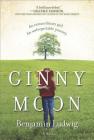
As regular readers know, I am always fascinated by cover changes between hardcover and paperback and I think in this case, this paperback jacket image is entirely appropriate for this book. A type-heavy and somewhat quirky design for the hardcover gives way for a photograph that indicates to me that at least someone on the art team knew what the book was about. That's not always the case!

Ginny Moon got some nice reviews, such as a write-up in The New York Times Book Review. Yes, we're aware it was part of The Shortlist, but do you understand how much cause for celebration it is when a book from an imprint of Harlequin gets a review? Here's Jan Stuart: "Ludwig’s novel recalls Mark Haddon’s The Curious Incident of the Dog in the Night-Time (editor's note: as we mentioned before!) in the singular way it filters domestic tensions through the hyper-alert yet skewed viewpoint of a special-needs child. His narrative wheels go flat whenever he uses Ginny’s scrupulously direct psychiatrist as a messenger to relay transpired events, but he displays an acute sensitivity to his protagonist’s deliberate thought processes. He also succeeds in locating a plangent, unpatronizing humor in Ginny’s literalness and deadpan certitude. ('When you hide a dead cat you should never put it under your mattress.') And that’s no small miracle."

Here's a video of Becky Anderson (of Anderson's) interviewing Ludwig.

 I can see this book offering a great discussion and it's really a particularly good choice for folks involved with social services. But most of all, we'd love for you to see Benjamin Ludwig in person and here him talk more about the story, how he was led to write it and the impact it's had on readers. Join us at Boswell Tuesday, January 23, 7 pm. This is event is free and open to the public and it's ok if you already bought a copy of the book. Come meet the author and get it signed!

* Officially this should be with an ampersand, but ampersand's are very difficult to maintain when you're jumping in and out of HTML code. And that fact would be interesting-to-the-blog-adjacent.

Tuesday, January 16, 2018

What did the book club think of Kazuo Ishiguro's Never Let Me Go? (If you want to avoid spoilage, don't read this blog and also refrigerate leftovers)

For the second time in three years, we decided to read a book from the Nobel Prize for Literature winner. I still feel bad that we didn't read a Patrick Modiano novel, and perhaps that regret let me to pick Voices from Chernobyl the next year. I'm a little weirded out that according to Ingram, there's no paperback of that book currently available. Seems unlikely. That said, I couldn't bring myself to pick something from Bob Dylan, and that led us to Kazuo Ishiguro. Being that I already read The Remains of the Day, and my thought was that the group had also probably read it, we picked Never Let Me Go. 

It turns out that this novel is, in the wake of the Nobel Prize, selling at a faster clip than Remains. Though it was also the subject of a film treatment, to my knowledge, the film was not a huge success.  Sometimes films curtail book sales, but it seems like an unsuccessful film might be better long-term for a book than a successful one. I spoke to my sales rep Jason about this, and he said that the book is a popular book for high school course adoption.

Never Let Me Go is a first-person narrative of Kathy, who was sent, at a young age, to a boarding school called Hailsham. I thought everyone knew the secret of the book, but go figure, more than half the folks in our In-Store Lit Group did not know what was happening until they realized that Hailsham was a very special boarding school indeed. C. said "What a sweet little book this is!" until she realized it wasn't a sweet book after all. That's the second time we've pulled that trick on her, following Edna O'Brien's switcheroo in The Little Red Chairs. 

Kathy's friends are Ruth and Tommy. It's a classic love triangle. Kathy is sort of in love with Tommy, who is partnered with Ruth. Ruth is a manipulator and convinces Kathy that even if she and Tommy broke up, Tommy would never want her. The story moves through their time at Hailsham, and then for a period after school, before they begin their vocation as carers.

Spoilers below.

The secret is that the three of them are clones who are being raised for their parts. After their education, they make their use in society as carers, helping donors after their operations. At one point a carer turns into a donor. Notice apparently comes by mail. When a donor has given their last donation, they've completed, which struck us as morbid and banal at the same time.

Apparently Hailsham is an experiment, where the students are raised humanely, educated, and encouraged to be creative. They even learn how to safely have sex. Because they are clones, they don't have to worry about pregnancy. The other schools (or maybe they aren't even schools)  are not as nice as Hailsham, but how they are bad are left to our imagination. Several of us were reminded of humanely raised animals vs factory farms.


For some reason, the best of their art projects are taken away for use in a gallery. For what? We're never quite sure, but this is definitely part of the experiment. When Kathy and Tommy locate two of the school officials after it closes, one gets the feeling was the art was to prove a point - but whether the ends was to raise clones humanely or to end clone farming altogether is left for us to decide.

Let's get to the negatives first. N. was one of those people for whom the book was a reach. Sometimes she comes around, but in this case, she stopped reading, and even our enlightening conversation didn't make her want to return to the book. D. is a self-proclaimed hater. He really didn't have much to say, except that he thought the book was juvenile. L1. liked it, but wondered if it was YA. (See comment above that a lot of high schools read it). We are not in agreement here; this was just one - well, two - opinions. J2. enjoyed reading it but was depressed by the end.

G. was in the positive camp. A little confused at the beginning, but hooked by the end. L2 went from hate, but then gave it an eight (out of ten). J2. really liked it. And S. told us this was the third time she read it. I'm a fan as well. I found it hypnotic. I can also see how there was an enthusiasm to turn this into a film and also can see how hard this would be to do. Like Remains of the Day, it could work as a Merchant-Ivory kind of thing but I'm sure there was a temptation to play up the SF elements.

There were questions. What exactly were they donating that they good go through four operations? This led to a discussion of kidney donor waiting lists. We also wondered why they didn't escape. This was not an apocalyptic book with futuristic surveillance. After all, they did love the film, The Great Escape. Had the escape been breeded out of them? Or were they, like the butler in The Remains of the Day, aware of their place in life, no matter what they might have wanted, and honor-bound to follow through?

We also had an interesting discussion of speculative vs. science fiction. The former is used as a literary crossover term and is more encompassing. But there's also this theory that speculative books set up a futuristic or alternate history presence but don't then follow through on the detailed world building and specifically the scientific details that sf fans crave. I do not crave the details, but I was interested in a world that had cloning but still had not gone beyond cassette tapes.

Speaking of which, several folks wondered if the song that captivates Kathy, Never Let Me Go, and its singer, Judy Bridgewater, was real. The answer is no, but they did create a song for the film, which you can listen to here.

Our take: don't expect a uniform response to Ishiguro's novel, but the discussion was lively and even the few folks who didn't like the book enjoyed talking about it. Lots of philosophical musing.

Upcoming In-Store Lit Group discussions:

Monday, February 5, 7 pm: The Anatomy of Dreams, by Chloe Benjamin

Monday, March 5, 7 pm: The Women in the Castle, by Jessica Shattuck.


Friday, January 12, 2018

A meandering and very enthusiastic blog post about Nick Petrie's "Light It Up"

If you follow my reading habits, you know that I do read my share of mysteries and thrillers, and in the last few years, I've increased the number I've read, partly because they are so much fun to recommend to others. And while I am not generally a series reader, I love that if you hook a reader, they are often hooked for at least several more books in the series. But then I find diminishing returns in pitching the subsequent titles - I'm generally still going to tell people to start with the first book. 

Of course sometimes an author's first novel in the series is not their best. My former colleague Jack Covert used to give me tips on where to start potential fans in various series. Not everyone can blow people away right out of the gate. Even though I recall selling Louise Penny very well with her first Gamache title, Still Life, which still continues strong today, Minotaur decided to make their Signature Edition title for Penny her fifth book, The Brutal Telling. To me, that means, "Start here" and many Penny-philes say that the Gamache books get better as you read through them.

When it comes to the Peter Ash series, Nick Petrie wrote quite an opener! The Drifter was one of my favorite books of 2016 and I continue to enjoy hand-selling it to new readers. It also has the added bonus that, like many openers, it feels like a stand-alone, and the double bonus that it's set in Milwaukee. It's so good that it doesn't feel like a first novel, and to be exact, we should call The Drifter his first published novel. 

When it came to book #2, Burning Bright, I think it did what it was supposed to do. Many readers liked it even more. It's more of a mainstream book, it's effectively a chase novel (what I used to call the Harlen Coben stand-alones when I'd recommend them), and it introduces a love interest. I am not the person that love interests are written for, but I know that they bring humanity to the character. The conspiracy at the center of the book is good, and the scenes in the treetops are particularly fun and I hope Mr. Petrie did a little hands-on research there. I know the books have to be more mainstream and a bit less stylized to really break out, dialing up the action and dialing down the ambience, and I'm down with that. Reviews were good, and the book made Carole E. Barrow's top ten for 2017.

And now we come to Light It Up, which I hope will be his breakout book. The premise is great. Peter Ash goes to Denver to help his friend's kid who has a marijuana security business. Because it's still illegal at the federal level, the legal marijuana businesses can't use banks, so there's a lot of cash floating around. But one of the trucks disappear making a shipment. Peter and his pal get a crew together for a replacement run, and...youch!  I like the rhythm of the book - crazy extended action sequences at the beginning in the end, punctuated by the story and smaller tense moments. 

I know this is a crazy aside, but I can't help these things. I went through an Iris Murdoch stage and I noticed that in two successive books, she had a really violent act, but in one book she did it at the beginning (The Good Apprentice) and the rest of the book was aftermath, and in the other, she did it at the end, and the whole book led up to it (The Book and the Brotherhood).Thank you to Fantastic Fiction for helping me figure out which was which. I had no time to read the rest of Murdoch's oeuvre, but I wondered whether she always played with momentum like this. Were there books that climaxed in the middle? Immediately my mind turns to Orhan Pamuk's Snow for this kind of structure. I'm guessing that the V structure is not that uncommon. The only time I don't like it is when the author (or publisher) takes a climactic moment and makes it the introduction. Note that in this case, I'm not referring to jump-time dual or triple narratives. In this case, I'm referring to the movement in one scene. I most recently saw this in The Improbability of Love, and I generally tell people to skip over it (which might be why we've sold the book so much better than most other bookstores on Treeline). 

My dream is for Janet Maslin to pick up and review (favorably) a copy of Light It Up, and for this to convince her to go back and read The Drifter. Though retired, she seems to still have a regular review slot. Maybe she could for once skip a Lee Child or Michael Connelly (they are great, really great, I know) where her review basically says, "this book is as great as all the other Lee Child and Michael Connelly books, for pretty much the same reasons," and review Nick instead.

I'm not crazy here. The momentum of The Drifter in 2017 has been nomination, nomination, nomination, nomination, nomination, nomination. I forget how many awards it was nominated for, but at least six. It won one too (oh, that was a hard sentence to write for someone who has homonym spelling disorder), a 2017 Thriller Award for best first novel from the International Thriller Writers Association. I wound up reading the best novel winner too, Before the Fall, which also won the Edgar. Look!

What I like about Light It Up is that it does seem to be about something - what sort of behavior drives honor and loyalty among friends and colleagues. There are honorable ways to drive loyalty and dishonorable ways and Light It Up features both. I like that the story was more closely about Peter Ash's life as a veteran too, something that wasn't as important in Burning Bright

We're celebrating the release of Light It Up on Tuesday, January 16, when Nick  (formerly Nicholas, as you can see by the cover history) Petrie will be in conversation with Bonnie North (above left) of Lake Effect. And if you miss that, Petrie will be at Whitefish Bay Library on Tuesday, January 30, 6:30 pm. And if you miss that, he'll probably be somewhere else. And if you don't like events, the book is available for purchase (at Boswell or wherever), borrowing (at a library), downloading, audio downloading, or maybe you can just have someone read it to you as a storytime that will be only a bit nightmare inducing. A couple of friends of mine used to read entire books to each other alous. I don't think it was a bad idea, though I don't think I could have made it work. 

And as to my regret that Mr. Petrie probably won't soon have a Peter Ash novel set in Milwuakee again... maybe there's a stand-alone in our future.

Wednesday, January 10, 2018

Ten reasons to buy The Immortalists, and if you're close enough, come to our event with Chloe Benjamin on January 18

The Immortalists came out on January 9. We have a lot to say about Chloe Benjamin's second novel. But I'm not going to write about the book's plot or why we love it so much here. You can read all our staff rec's on the Boswell Immortalists page. No, this blog is about all kinds of things that go into publishing a book. And just think, publishers are doing this with books and independent booksellers all the time. And with B&N. And Target. And Amazon. And Books-a-Million. And all sorts of media outlets. And Bookspan (that's the old Book-of-the-Month Club). And regionals. And bloggers. And vloggers. And Costco (if Pennie likes it). And libraries and librarians. And well, anyone they can get to pay attention who might have some sales influence.


1. The reads, part one! I think we've broken our record for number of reads on this book: Daniel, Jason, Jen, Jenny, Kay, Scott, Sharon, Todd. Eight! OK, Todd's no longer at Boswell, but he shops here a lot and doesn't that count for something? Peter's still reading it, but he might be added to the total. While some of us were more over the moon about The Immortalists than others, it means something that seven of the eight of us liked it and for six of the eight of us, we liked it enough to write a staff recommendation. I like that one of us didn't really like it; Boswell celebrates our freedom to say "meh, not for me."

2. The letter! I might have mentioned before that editors, agents, publishers, marketing are always sending us books. And not just me. This week Jen was chatting with an editor who noticed she'd loved Readers of Broken Wheel Recommends and that we'd sold a ton of it. I wish I could read more of them, but let's remember my limitations - I only read six or so books a month. Last year I got to 90, which was a recent high. So maybe you can say seven.

But when Putnam's Sally Kim wrote to me about this book (last March?), it connected on so many levels. It felt like the letter was talking just to me. Only later did I learn that maybe she was talking directly to me - it turned out to not be a form letter. But the four Gold children were about my age, and their family was in the garment business (like mine) and while we did not live on the Lower East Side, my oldest sister's in-laws did, and my parents liked to visit the shops on Sundays. I was fascinated that parking was free on Saturday but metered on Sunday. Is there any other old Jewish neighborhoods in the United States where they did that?

And did I mention that one of the kids was named Daniel? I'm reading a book about someone my age named Daniel Gold. How weird is that? So what I'm saying is that you never know what book is going to call to you, and sometimes the reasons are rather arbitrary.

3. The author! While I couldn't say I was friends with Chloe Benjamin, we met a few times. She lived in Madison and did an event with us for her first novel, The Anatomy of Dreams. It went pretty well, mostly because she had a champion in her friend Bri Cavallaro, who many of you might know from her very popular (and deservedly so!) kids series, A Study in Charlotte. Plus she's a prize-winning poet.

And then we ran into each other again, when Benjamin won the Edna Ferber Prize from the Council for Wisconsin Writers for her first novel. Weirdly enough, I also won a prize, my first I can remember since junior high school, the Christopher Latham Sholes Award, which I got for, wait for it, promoting Wisconsin writers. Below right is a picture of the prize winners with the board. Note that I didn't know Benjamin well enough to sit next to her. Hey, it's time for someone else to get this Sholes Award, isn't it?

But that is just to say that I didn't read it because we were pals. Does that happen? Of course.  But the thing about me falling in love with The Immortalists was that it felt authentic. And then of course I've met her at various functions and she's as nice as can be. Who wouldn't want to Benjamin find success?

4. The reads, part two! And then there's the next read in the store. Jen convinced me to read Pachinko (and that went well) and I was convinced that she would like The Immortalists too. Our tastes overlap but they are hardly completely in sync, but this seemed like a crossover book. And when she came back all ebullient, I got even more excited. One of the things I learned from the days of Schwartz (and working with my Schwartz pals to get folks to get on board with things like History of Love, Astrid and Veronika, and The Elegance of the Hedgehog) is that you know something's magic when people with very different reading tastes agree. It was when Conrad got behind The President's Hat that I thought we had something special, and we're now 300+ copies later.

Speaking of different readers coming together, may I give a pitch for the paperback of Hum If You Don't Know the Words**? Six great reads, close to 100 copies sold in hardcover, but I just don't think as many stores as I'd hope discovered how great this book is. Ask your rep for a copy. It's not a hard sell and it delivers.

5. The buzz! Not every book on the Book Expo Buzz Panel takes off, but a few do each year. It was exciting to see Benjamin featured. And the enthusiasm has built from that. It's a pick from both B&N and Amazon. It's the #1 Indie Next pick for January.

If you want an explanation of Peter's drawings, the ballet shoes belong to Simon, the top hat and wand to Klara, the stethoscope to Daniel, and the beaker represents Varya. Do I think that Klara would have used a top hat? Probably not. But does it signify magician? Yes. If you look closely, you'll see that each drawing uses one of the four colors (red, orange, yellow, and green) of the cover as an accent. It's very subtle!

6. The swag! So much swag. The cover is so beautiful that it lends itself to visual interpretations. There's the tote bag (from Envirotote, where I'm slowly trying to place a reorder for a Boswell tote, because I like this one so much), which was a very much in demand at Book Expo. There's a tee shirt. There are buttons. We don't normally demand a blow up cover for our event but I begged for one this time. I promised it would be up permanently in the store for at least the next few years.

7. The window! The visuals on the cover of course demanded some sort of visual merchandising. We're touch and go about effectively using our big window. I think we did a really cool window for Scott Kelly's Endurance, but then we had a big of a hole before we filled it with holiday books. I have two more planned out for spring. I can't believe that some stores do this every month, or even every two weeks. Peter and Olivia did a great job putting it together. I really wanted icons representing the four characters. And Amie noted that we had some leftover ornaments that matched the leaves on the jacker. I wanted hanging letters that I don't think we've done since we hosted T.C. Boyle. It looks great, but pictures never turn out great - our window creates a lot of glare.

8. The event! Being that we are only an hour from Madison, it was not hard to making a convincing pitch to put us on the tour. In these days where author tours are shrinking, it's exciting to see Putnam working with venues around the country (with lots of indie bookstores). I love the image they made for the tour.  I'm trying to do the conversation with this one, as we usually get nice feedback from this format. If you look at this slot, it's equivalent to Emily Fridlund's History of Wolves. Hey, that went on to be a finalist for the Man Booker and has been selling like crazy in paperback. We had an okay turnout for Fridlund, but the trick on this sort of thing is that most of the enthusiasm was coming from us. Had that event been later, the number would have been much bigger. Our event is Thursday, January 18, 7 pm. Let me just say right now, you are going to have a good time.

I'm rereading the book since it's been so long ago. I'm also halfway through The Anatomy of Dreams, Benjamin's first novel, which is our In-Store Lit Group pick for February (Feb 5, 7 pm, at Boswell). This has really helped us get the word out about the new book. I am hoping that many of our book club attendees will have read both books. I see some connections!

9. The reviews and profiles.
a. A profile in Bustle
b. A review in The Economist
c. A review in Pop Sugar
d. Marion Winik's eternal life roundup in Newsday
e. San Diego Jewish World review
f. The AP review, reprinted in The Washington Post
There's also a review that gives away every twist, and on top of that, the review is lukewarm. I think the lukewarm review is connected to revealing all the spoilers. But don't worry - studies show that knowing the spoilers doesn't make you like a book (or film, or whatever) less, and sometimes it makes you like a book more.

One thing that Benjamin has said in interviews is that she had hoped the Daniel (not me) section would be more Jewish themed. At one point, he was going to be an architect. It just didn't work out. It's interesting that the opening is so Jewish and the rest not so much. But in a way, that works too - there are five sections in the book and each almost has a different worldview. (At left, Daniel shilling for the book. I might have to park myself at a busy street corner. If I were a doctor, I wouldn't have to do this.)

The Immortalists is like reading five books in one. The Simon section brought me back to the glory days of 1990s gay male coming-of-age fiction, of Edmund White and Christopher Bram, the pre-and-post AIDS stories of Armistead Maupin and David Feinberg's Eighty-Sixed. I was just talking to a publicist about Call Me by Your Name (Aciman is at Boswell on February 19, by the way), which came out at the tail end of that. I mentioned that I read the book when it was out in hardcover (or maybe as a galley!) He thought fondly about Mark Merlis's An Arrows Flight and I highly recommended Christopher Bram's Lives of the Circus Animals. I love that book so much that it is on and off  my rec shelf even this past year, 15 years after publication. Now I feel like I should read it again, and see how it holds up. I'm fairly confident, but you never know.

10. Oh, come on. Just take my advice and read the darn book. No, not all of you are going to love The Immortalists, but it's a fascinating premise that is so well told. it straddles the line between commercial and literary with finesse. It's a book that works for readers who like speculative novels, coming-of-age books, philosophical inquiries, and thrillers, because it is all those things. It's a book where you want to talk about it afterwards, and talk about each character. I've already figure out that Daniel doesn't generally come out on top. But I have to give my doppelganger* props - he's a loyal guy who loves his family.

So why so much work on this? We're tiny, a niche of a niche of a niche. But there's a perception that independent booksellers can have outsize influence. We can sometimes affect how other retail outlets and websites and media position a book. Somebody's thinking, "I should pay attention to this." And that's probably a good thing, at least when the attention is mostly positive.

In conclusion, read The Immortalists.  And if you're reading this before January 18, come to Boswell for our event with Chloe Benjamin.

*There was a good deal of hope on my mother's part that I would be a doctor. My life as a bookseller did not compete very well with her friends' kids.

**I mention Hum If You Don't Know the Words partly because it's also a Putnam book and because I went to a lovely Putnam cocktail party in Chicago where Bianca Marais was featured, and came back from it super jazzed about the book and how wonderful the author was. The enthusiasm was infectious and we wound up with a terrific event at the Lynden Sculpture Garden (thanks to partners Margy and Polly!) and great post-event sales.

But the truth is that Sally Kim and I spent much of the cocktail party talking about The Immortalists. Sally and I met many years ago at a party in Brooklyn thrown by our mutual friends Charlotte and Roz. And yes, Charlotte and Roz were immortalized in a party scene (page 291) in Christopher Bram's  Lives of the Circus Animals. When you see this kind of interconnectedness in our town, someone always says "Smallwaukee."