Sunday, December 8, 2013

Sunday Bestseller Post for the Week Ending December 7: Of Big Tops, Good Stock, and Laughing Hyenas

Hardcover Fiction:
1. Aimless Love, by Billy Collins
2. The Goldfinch, by Donna Tartt
3. Dog Songs, by Mary Oliver
4. The Luminaries, by Eleanor Catton
5. The Good Lord Bird, by James McBride
6. S, by J.J. Abrams and Doug Dorst
7. The Ocean at the End of the Lane, by Neil Gaiman
8. The Illusion of Separateness, by Simon Van Booy
9. Brown Dog, novellas by Jim Harrison
10. Just One Evil Act, by Elizabeth George

As we get further into the holiday season, our king and queen of poetry are consolidating their power, something I would suspect Jason didn't expect when buying for the holidays. He also noticed that Eleanor Catton, a clear winner in the indie market for sales, is not on the top 15 of The New York Times fiction list.

I don't think we previously wrote up Elizabeth George's newest, Just One Evil Act (Dutton). This time Barbara Havers, with the help of Thomas Lynley, investigate a kidnapping. First the baby disappears with the mom, and then the mom disappears as well. Tom Nolan in The Wall Street Journal calls Just One Evil Act "Among the most demanding and satisfying of the many detective novels by Elizabeth George featuring Havers and her New Scotland Yard partner, Inspector Thomas Lynley. Even the compassionate Lynley comes to doubt not only Havers's fitness as a police officer but her sanity."

Hardcover Nonfiction:
1. A People's Art History of the United States, by Nicolas Lampert
2. Good Stock, by Sanford D'Amato (event December 17, 7 pm)
3. The Bully Pulpit, by Doris Kearns Goodwin
4. David and Goliath, by Malcolm Gladwell (ticketed event, more below)
5. Schlitz: Brewing Art, by Paula Bialas (event tomorrow, Monday, December 9, 7 pm)
6. Things that Matter, by Charles Krauthammer
7. This is the Story of a Happy Marriage, by Ann Patchett
8. My Promised Land, by Ari Shavit
9. I am Malala, by Yousafzai Malala
10. Beatles Vs. Stones, by John McMillan

The rock and roll revolution continues, with Beatles Vs. Stones seemingly leading the pack. (Of course we know that the rock revolution was overthrown by Hip Hop dynasty, but we'll let some of our customers think otherwise). John McMillan gets a nice write up in The New York Times, with Anythony DeCurtis observing that "Even the most gnarled and intransigent veterans of the Beatles-Stones debates will emerge enlightened by this book."

We're pretty much got all our ducks in a row for a Malcolm Gladwell appearance at the UWM Zelazo Center on Friday, January 31 for David and Goliath. Tickets are $32 including all taxes and fees and should be up sometime tomorrow. In addition, the UWM bookstore will have tickets available at a 10% discount for UWM students, faculty, and staff. I should note that for this event, there is no gift card option, but of course you know the book makes a great gift. More to come later this week.


Paperback Fiction:
1. The Aviator's Wife, by Melanie Benjamin
2. Beautiful Ruins, by Jess Walter
3. Dear Life, by Alice Munro
4. The President's Hat, by Antoine Laurain
5. A Casual Vacancy, by J.K. Rowling
6. The Unlikely Pilgrimage of Harold Fry, by Rachel Joyce
7. Best American Short Stories 2013, edited by Elizabeth Strout
8. All Saints, by Liam Callanan (in store lit group meets Monday, January 6, 7 pm)
9. NOS4A2, by Joe Hill
10. Me Before You, by Jojo Moyes

We had a very nice event with Ms. Benjamin (or for folks in the know, Ms. Hauser) at the Lynden Sculpture Garden. In another post-wrap up of a Boswell event, Stacie just informed me that a certain author ordered a hat from The Brass Rooster and is being shipped now.

Popping onto the paperback list is NOS4A2, the newest novel from Joe Hill. From Carol Memmott in USA Today: "Like the hell-bent '58 Plymouth Fury in King's 1983 novel Christine, much of the evil in NOS4A2 is linked to the Rolls-Royce Wraith. But let's be clear. This story, its creep factor and propulsive story line are Hill's alone. You're not reading Stephen King. You're reading Joe Hill."

Paperback Nonfiction:
1. Wild, by Sheryl Strayed
2. From the Top, by Michael Perry
3. How Music Works, by David Byrne
4. Hyperbole and a Half, by Allie Brosh
5. Philomena, by Martin Sixsmith
6. How Children Succeed, by Paul Tough
7. Guys Can be Cat Ladies Too, by Michael Showalter
8. March, by John Lewis
9. Holidays on Ice, by David Sedaris
10. Wheel Fever: How Wisconsin Became a Great Bicycling State, by Jesse Gant and Nicholas Hoffman

As you know from our blog and email newsletter, Michael Perry released From the Top: Brief Transmissions from Tent Show Radio, a series of essays from the Big Top Chautauqua radio program. The closest he came was the Ixonia Fire House, and yesterday he appeared with Judith Siers-Poisson in Menomonie. Don't worry, he'll one day be back in Milwaukee, but for now, you can read this interview with Perry and Julian Emerson in the Eau Claire Leader Telegram.

Hardcover Books for Kids:
1. Jumping Penguins and Laughing Hyenas, by Marije Tolman
2. The Fault in Our Stars, by John Green
3. Wonder, by R.J. Palacio
4. Diary of a Wimpy Kid Volume 8: Hard Luck, by Jeff Kinney
5. Maps, by Aleksandra Mizielinska
6. Bird King, by Shaun Tan
7. The Polar Express, by Chris Van Allsburg
8. Nelson Mandela, by Kadir Nelson
9. Locomotive, by Brian Floca
10. Counting by 7s, by Holly Goldberg Sloan

It's great to see Jannis's pick, Jumping Penguins and Laughing Hyenas, at the top of our list. Julie Danielson in Kirkus Reviews calls this "an unusual piece of nonfiction, blending fantasy and facts in a way that says it would not like to be pigeonholed, thanks very much." It was originally published in The Netherlands.

So it turns out that if you are a nonprofit and want to have a holiday railroad called "The Polar Express", Warner Brothers (not the publisher, not the author, but the producer of the not-very-good movie) demands 30% of the grosses. So the Lake Superior Railroad Museum published their own book and gave up the name. The new book and ride is The Christmas City Express. Maybe that will one day be a classic at the same level. Here's more info on the story in Publishers Weekly. Note that we don't currently have the book but you can buy it at the museum.

If you're wondering why we had sales pops for Wonder and Counting by 7's, they are two books recommended in a Wall Street Journal story this week on adults reading books written for young readers. Another book that popped on our paperback list this week is Sharon Draper's Out of my mind. We would have added Sheila Turnage's Three Times Lucky to the list, but otherwise, we're excited see these books highlighted.

Paperback Books for Kids:
1. Fallen Angels, by Walter Dean Myers
2. Unwind, by Neal Shusterman
3. Gym Candy, by Carl Deuker
4. Boot Camp, by Todd Strasser
5. The Book Thief, by Markus Zusak

Mixed between a large school order was our continuing sales pop for The Book Thief, currently playing at the Downer Theatre, along with Nebraska. Alexander Payne usually adapts from novels (Election, the Descendants, Sideways), but this time he went with an original screenplay.

Those of you who read Jim Higgins' Journal Sentinel blog know he has been rereading John Updike. That said, he's not the only 20th century American classic he's sinking his teeth into. Regarding the new Roth Unbound, by Claudia Roth Pierpoint, "If you've been tempted to dismiss Philip Roth as a misogynist, a self-hating Jew or simply an old white male dinosaur, Claudia Roth Pierpont's Roth Unbound: A Writer and His Books makes a strong argument for giving the novelist another chance.

Also in the printed edition of the Journal Sentinel is Amy Driscoll's interview with James McBride, author of the National Book Award winner, The Good Lord Bird. "We have to find ways to talk about our history that doesn't punch people in the teeth. I'm glad to be alive now--I'm not sure this book would have been readily accepted a few years ago," he says. The original interview was in the Miami Herald.

Critic Mark O'Connell touts The Encyclopedia of Fairy Earth, by Isabel Greenberg. which he calls "an inventive graphic novel about the telling of stories, about making things up and staying alive." Inspiration comes from many different sources, from ancient Greece to Norse legend and the Arabian nights. This originally appeared in Slate.

Say hi to us at the Buy Local gift fair, from 12 noon to 4 pm today at the Lakefront Brewery.

Saturday, December 7, 2013

Saturday Gift Post--Of Whimsical Thermometers and Other Assorted Odds and Ends.

I don't really have a particular theme for this gift post, but am just highlighting some interesting items. These yeti boy and devil boy themometers showed up as part of a line of greeting cards that I bought at the Minneapolis gift show. I think when I looked out a window, I'd want to both know the temperature and get a little smile, and this seems to fill the bill.

After one of my gift posts, a customer called and told me she had a woodland theme going, and wound up buying deer, fox, mice, and owl ornaments from us. Going into the season, I hoped that TAG would redo the fox and raccoon plates and mugs, perhaps as open stock, but it was not to be. I do like these new Page Flags called Walk in the Woods. There are a lot of these sticky notes lines out there, but this line seems to do consistently well. 

Also pictured is a new-to-us notecard called Bird Sketches. It's from a line we buy aggressively, so I was sort of surprised when this retro design caught my eye and I hadn't yet brought it in. 

Our Providence workshop that provides our leaf and snowflake ornaments also makes lovely magnets. In this picture, you can see the Nutcracker ornament set (bought by at least one of our booksellers as a gift) as well as two magnet sets, pointing fingers and assorted ephemera (feather, leaf, maple polynose or whatever you call them) , and an acorn.

We also restocked our popular leather bracelets. There is a nice assortment of floral designs plus a number of animals, including turtles, owls, butterflies, ladybugs, and a stray snake. Is it morbid of me to be drawn to the black flowers? I don't seem to like black in anything else. Perhaps I'm just contrary.

While we continue to restock everyday items, I made the decision to let our recycled sweater puppets and journals sell down for the holiday. We still have a nice assortment of both, but it gets smaller every day. They, along with their cell phone/coin purses, are made in Canada.

And now back to ordering in Valentine's Day cards.

Friday, December 6, 2013

Friday Short Post--More on Cover Changes, Bookplates for Our Featured Storytime Book, and Ice Sculpture Action.

Yesterday's discussion of cover changes got some interesting feedback. What did we think of the Louise Erdrich change? Another rep told me he'd just come from sales conference, and he could only think of two books on the list that didn't have a dramatic change from hardcover to paperback.

The most interesting comments came from Richard Rhorer at Simon and Schuster, who followed up on my comments about Brain on Fire. The two jackets side by side are on yesterday's blog post.

"In case you’re curious, we wanted to simplify the cover and come up with a variation that looked more sophisticated and less alarming than the red with the bold, san serif font. The UK publisher had used yellow with the image so we picked up their color pallet and went with a serif font."

"We’re currently working on paperback covers for The Rosie Project. That one will have a more dramatically different look than the Brain on Fire conversion. We agonize more than you might expect whether to change or keep jacket art on paperbacks. When I worked at HarperCollins many years ago, they drastically reworked the cover for the paperback edition of Bel Canto. I think that decision was instrumental in making that book a blockbuster."

Jannis also got a pleasant response to her inaugural edition of storytime, coming this sunday, December 8, at 11 am. Having heard that Jannis was featuring Goodnight, Goodnight, Construction Site, Sherry Duskey Rinker sent us a care package with signed bookplates for both that book and Steam Train, Dream Train, as well as temporary tattoos, and stickers.

Finally, just a reminder that Festive Friday is going on tonight. This year we remembered to sponsor an ice sculpture, and hey, it will be cold enough so that it doesn't melt.  Above is a photo of said sculpture, pre-carving.

Thursday, December 5, 2013

Cover Change-O. Will it Help the Book in Paperback? And Some Contrary Publishers Keep Their Iconic Jackets and Yet Improve Their Fortunes the Second Time Around. What's That About?

Today we were having a chat in the store about books changing cover treatments when going into paperback. I had noticed Victor LaValle's The Devil in Silver (Spiegel and Grau) and said to Jason, "now we are making it clearer that this is a horror novel." The all-type jacket in the cloth edition was hedging its bets.  You like literary fiction? Maybe I'm your book.

Whatever the jacket, Jason is a big fan. Allow me to reprint his recommendation: "Pepper is sent to a mental institution when he lets his temper go one night and fights with the wrong guys. The cops dump him into a situation where the patients are under fear of the devil, who visits them late in the night. With the staff unwilling to do anything about it, and possibly complicit, the patients have to band together to take down the devil. But, should they? Victor LaValle presents an isolated world where not everything is what it appears to be. The Devil in Silver is a spooky and wonderful book that looks at how hiding from our problems doesn't make them go away."

Sharon gave me a copy of Kimberly McCreight's Reconstructing Amelia (Harper Perennial). Argue if you wish, but it's my contention that the publisher was going with a Gillian Flynn look for the hardcover, but veered towards Jodi Picoult for the paperback. The publisher writes "Litigation lawyer and harried single mother Kate Baron is shocked when her daughter's exclusive Brooklyn private school calls to tell her that Amelia--her intelligent, high-achieving fifteen-year-old--has been caught cheating. But when Kate arrives at Grace Hall, she's blindsided by far more devastating news: Amelia is dead. Despondent, she's jumped from the school's roof. At least that's what Grace Hall and the police tell Kate. It's what she believes, too, until she gets the anonymous text: Amelia didn't jump." So what would you do to get the most folks. Or would you go in a Tana French direction--that was another comparison.

I'm pretty sure Sharon read this and liked it, but alas, I think my hard drive died between backups and her rec is not longer in my files. And of course I could be wrong about the whole thing. Talk about faulty reconstruction.

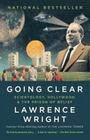
One doesn't normally see as dramatic changes in nonfiction, with the possible exception of narrative nonfiction, those books that read like a novel and for most readers, slot into the same usage of escapism, book club, and so forth. But there's been quite a change up for Going Clear: Scientology, Hollywood, and the Prison of Belief,  Lawrence Wright, a staff writer at The New Yorker

Says the publisher: "We go inside their specialized cosmology and language. We learn about the church’s legal attacks on the IRS, its vindictive treatment of critics, and its phenomenal wealth. We see the church court celebrities such as Tom Cruise while consigning its clergy to hard labor under billion-year contracts. Through it all, Wright asks what fundamentally comprises a religion, and if Scientology in fact merits this Constitutionally-protected label."

Maybe because of all the book's laurels, such as the National Book Award Finalist, rave reviews from The New York Times, The Wall Street Journal and more, that there was a greater push to get the book on the paperback bestseller lists. The nice thing about that is if you pop on the list, there's a very good chance you will seemingly never leave. That's been the case for a favorite of mine, Susannah Cahalan's Brain on Fire (Simon and Schuster, formerly Free Press) and they only changed the cover a bit, from a red accent to a dark-horse pick of yellow. But it's been on the paperback list for 17 weeks just the same.

My rec for the book in hardcover, which was also the Indie Next Pick quote.  "A young reporter’s near-death experience started with what seemed to be a bedbug bite, followed by an out-of-character migraine. Cahalan forgot a pitch meeting. She snooped on her boyfriend’s email. Beloved newspaper clippings were tossed. Garbage piled up in her apartment. And then the seizures began. This compelling story of one woman’s descent into madness and the equally horrifying journey of her family to get suitable help works both as a great literary memoir and a well-reported medical mystery. You might say the result is Girl, Interrupted with a dash of The Hot Zone and a sprinkling of The Exorcist!"

This might be an indication that cover changes are a bit overblown as a marketing solution to making the book work. Another book that had virtually no cover change from cloth to paper and nonetheless had a paperback breakout is Tara Conklin's The House Girl (William Morrow). The book was a #1 Indie Next pick in hardcover, featuring this quote from Beverly Bauer of Redbery Books, Cable, Wisconsin: “Lina, a young, ambitious New York attorney in 2004, never knew her mother. Josephine, a young house slave in 1852, never knew her child. More than a century apart, their lives connect in unexpected ways."Bauer goes on to note that both of the protagonists might be "the house girl."

Is that a very slightly different tone of green? I can't even tell. But it's about as identical as I've ever seen a hardcover to paperback jacket be. Not even a typeface change!

Morrow breaks every rule here. The stuck with the cameo-style silhouette jacket made popular with Little Bee, when Simon and Schuster even dumped the image for the paperback of Gold, which by the way, still didn't pop the book. They kept a green jacket, even though publishers continually dump green for another color in paperback, most recently Billy Lynn's Long Half-Time Walk and Davy Rothbart's My Heart is an Idiot, which kept the hardcover jacket, but changed out the background cover from green to a striking purple. And sure enough, I picked up the book and I heard an "I'm so tired of that jacket style." Honestly, how many have their been? Surely not as many as the woman with the cut off head or the pair of shoes.

Allow me just one more book where they decided to keep a controversial cover and it paid off.It's Mr. Penumbra's 24-Hour Bookstore (Picador). Jason said to me, I didn't keep my copy of the book because I didn't like the jacket, and you know what? I was rather surprised as well. For one thing, it was a type hardcover and art directors almost always add an image, unless of course the book is an enormous bestseller, like The Art of Fielding or Where'd You Go, Bernadette? (both Back Bay).

Also an Indie Next pick in hardcover, Andrea Aquino at Bookshop Santa Cruz wrote "Booksellers and book lovers alike will adore charming Mr. Penumbra and his towering stacks of mysterious, code-filled tomes, as well as the array of eccentric old men that make up the store's late-night clientele." I do like that they kept the tactile elements of the cover on the paperback and the free prequel.*

OK, it's not identical, as you have to write "national bestseller" on the paperback. That's almost required. As if someone would not pick it up otherwise. 

*Addendum. Our rep Anne reminded me that the jacket for Mr. Penumbra glows in the dark!

Wednesday, December 4, 2013

What Did the Book Club Think of Louise Erdrich's "The Round House"?

Like most other Louise Erdrich novels, I put The Round House on my “maybe I’ll read this” pile. In the days of buying for Schwartz, my excuse was that there was always another bookseller that wanted to read the advance copy or two that came into the buying office. I don’t know what my excuse is now—there are just enough time as a bookseller to read everything. I guess everyone can say that, right?

I also have a lot of strong memories selling Erdrich’s title, but several stand out. For some reason, when I think of The Beet Queen, I think of the old Book Nook in Whitefish Bay. Her publisher did a major commercial push for that novel, following her National Book Critics Circle Award for Love Medicine. For The Master Butcher’s Singing Club, I think of the Brookfield Schwartz, where we had a particularly strong sale.It was an unusual novel for Erdrich, as it explored the German side of her heritage.

Whatever the numbers in the past, if you exclude past events with Erdrich at the Schwartz bookshops, our hardcover numbers for The Round House are probably better than any single location ever had previously for an Erdrich book, excluding any possible events we had. So now the book was not just a release, it was a phenomenon. It continued to gnaw at me that I hadn't read it. (Photo at right credit Paul Emmel.)

Problem solved, as we read The Round House for our in-store lit group for December. I knew a bit about the book going in, of course, and knew that Erdrich had chosen to write a book using more of the form of a suspense novel. According to interviews, this led her to adjust her normal structure, writing from one person’s perspective, the adolescent Joe Coutts, instead of her favored round-robin storytelling. But what I didn’t catch is that the book is in a sort of informal cycle, starting with A Plague of Doves, where Joe’s father, Judge Bazil Coutts, also makes an appearance.

You probably know the setup, though as a thriller, one has to be more careful not to give things away. I think I’m going to write “spoiler alert” here, just in case, even though I’m going to try to avoid spoiling. The story starts with Joe’s mom physically and sexually assaulted by a stranger. The details are vague because Geraldine is in shock, and more than that, she’s prevented from seeing her attacker.

Because the attack takes place in an area that tribal state, and private lands meet, and Geraldine doesn't actually know where she was attacked, it becomes a challenge to prosecute the case, let alone figure out who has the jurisdiction to find the attacker. And that’s when Joe, with the help of his friends, try to take the case into their own hands.

So how did the book club go? N and J were the most enthusiastic of the bunch, though one of the C.’s, who did not attend, told me beforehand this was among the best books we’d read to date. One of my questions was how would a reader of mysteries like the book, being that it’s a genre that Erdrich hasn’t written in before, and knowing that C, an avid reader of mystery/suspense, really enjoyed it said something about her success. Even before the National Book Award came, the book was selling at a faster pace than I'd seen in a while, and that was likely in part due to the pacing.

One reason why Erdrich is always an interesting read is that she gives insights into reservation life. For the readers like G and C2 who’ve read a lot of Native American writers, they’d felt that previous books they’d read focused on struggling Indians, while Erdrich’s newest really focused on a middle class family. L thought that the book made assumptions about what she knew, and found it difficult to get through certain sections as a result. We discussed several other Native writers worth reading, like Sherman Alexie, Leslie Marmon Silko, James Welch, and David Treuer.

Most of the attendees really liked the scenes with Joe and his friends, and noted that this could have been any group of kids, not just ones on a reservation. A couple of folks pictured them being more like 15 than 13, so the question was were these kids growing up faster in this environment, or did we not simply know how kids of this age acted or was this a critique of the book? The question was argued out and completely not settled.

G mentioned that when she was younger, she was in discussion to adopt a Native American child, something that would probably not happen today. But it tied in to one of the plot points of the story, where Linda was rejected by her White family and informally adopted by a Native American one, and later on, the White family tried to take the Native family’s land which Linda was allowed to live on (as well as something else of Linda’s, which I actually found to be one of the funnier scenes in the book).

We had a good talk about Native religion and Christianity and how the two played against each other in the story. J had previously heard about how the religions would intertwine but nobody had ever spelled it out to her as well as Erdrich. N had noted that Catholicism seemed like a particularly elastic religion that had long appropriated all sorts of traditional cultural practices into the religion, unlike some of the more rigid Protestant denominations. We all liked when the boys called Zelia (the object of attention of one of Joe's friends who is part of a mission to bring Christianity to the reservation) on her lack of knowledge about her own background. Being Mexican and relatively dark, she clearly had a good percentage of Native blood in her.

Another spirited discussion was over the justice taken in The Round House, and this is where the spoiler alert really kicks in. None of had any qualms about the justice taken in the story, but I wondered why that was. Did we all believe in vigilante justice? What exactly was our stand on capital punishment? I think to make her point, Erdrich had to make one sacrifice by making her villain completely and unambiguously villainous. If there had been a dog, he would have had to kick it. I think this was for two reasons. The first is that moral ambiguity is less apart of the suspense novel. And secondly, other points in the story would be harder to make if we had any identification with the character whatsoever.

We also had an argument about the ending. Much like for The Absolutist, the question was brought up as to why a final plot development happened after the story had been wrapped up. I am not going to get more detailed because I can’t even use an adjective without falling into spoiler territory.

Most of us wound up liking The Round House, but there was a range from mild enjoyment to intense enthusiasm. I was sort of disappointed that the folks who were less positive on the book were not particularly vocal. I wouldn't have minded a little more voicing of disagreement, but sometimes it can be tougher when a book is as lauded as Erdrich's.

And since we were speaking of Catholicism, I should note that next month we’re discussing Liam Callanan’s All Saints, focusing on a theology teacher at a Catholic high school. Mark your calendar for Monday, January 6, 7 pm.

Our February meeting is for Ruth Ozeki’s A Tale for the Time Being. Her acclaimed novel arrives in paperback on December 31 and our meeting is Monday, February 3, 7 pm.

I actually have our book selections mapped out through May, though I reserve the right to make adjustments. March is Rachel Kushner's The Flamethrowers, April is Anthony Marra's A Constellation of Vital Phenomena, and May is Meg Wolitzer's The Interestings. It's not too early to mention that Wolitzer is visiting Boswell on April 24. We'll be discussing the book in the first week of May, but I'm enouraging folks to read the book a bit early and get a bit more out of the talk.

Tuesday, December 3, 2013

A History of This in Ten, Twenty, Fifty, or a Hundred of That--A Roundup.

Several years ago, a book came out by Neil MacGregory called A History of the World in 100 Objects. It was a tie-in to an exhibit at the British Musuem and a 100 part radio series, telling the story of humanity through bronze vessels and Victorian tea sets. It turned out to be quite popular enough to start a bit of me-too publishing.

MacGregor's next book is Shakespeare's Restess World: A Portrait of an Era in Twenty Objects (Viking), a collaboration between the British Museum, the BBC, and the Royal Shakespeare Company.  Also an exhibit and a  BBC series, the new book collects paintings and books and and medals and communion cups and all sorts of other ephemera that will give us a greater understanding of the Bard. Stuart Kelly notes in The Scotsman that there is "much to fascinate" in MacGregor's work. Jump to his essay for his quibbles.

It's not surprising that Harold Holzer, a Lincoln expert who is also a Vice President at the Metropolitan Museum of Art would come up with The Civil War in 50 Objects (Viking). With an introduction by Eric Foner, this collection includes daguerreotypes, a soldier's foot locker, original documents, and more. This book is a collaboration with the New York Historical Society, as most of the items are from their collection. T. Rees Shapiro in The Washington Post writes that "Holzer handles the task with ease, showcasing the era through such artifacts as a pair of slave’s shackles sized for the wrists of a child and a copy, signed by Abraham Lincoln, of the manuscript for the 13th Amendment."

The Smithsonian gets in on the crazy with Richard Kurin's The Smithsonian's History of America in 101 Objects (Surprise! It's the Penguin Press, not Smithsonian). Kurin serves as the Smithsonian's Under Secretary for History, Art, and Culture. Yes, there are the usual paintings and documents, but also a cotton gin, a freedom pin, Custer's jacket, and Dizzy Gillespie's trumpet. The Tulsa World highlighted the book, in conjunction with Richard Kurin's visit to Tulsa Town Hall. Alas, it's too late to book a flight to see this presentation, as it already happened. 

Two trends come together in A History of the World in 12 Maps (also Viking), by Jerry Brotton. Maps are crazy hot this year; maybe because printed maps have suddenly become nostalgia (see holiday card of Santa reading map). Jeremy Brotton is at London's Queen Mary University and was short-listed for the Samuel Johnson Prize (holds a special place in our heart) for The Sale of the Late King's Goods: Charles I and His Art Collection. The new book starts with Ptolemy's Geography and ends with the too-big-for-this-volume Google Earth satellite project.  Matthew Price complains that Brotton could have more of a sense of humor (he's obviously been reading too much Simon Garfield) but otherwise has nothing but praise: "Brotton shows how these maps not only showed the world, but reflected the values--and politics--of their makers." When it comes to maps, subjectivity rules.

And finally, a book that reminds me as much of Workman's 100 Places You Must See Before You Die as much as these object histories. 1001 Idea That Changed the Way We Think (Atria), with a preface by Arthur Caplan, is, per the publisher, "a wealth of stimulation and amusement for everyone with a curious mind." Robert Arp is the general editor, presumably overseeing a team of able-bodied idea folks who researched everything from natural selection to psychoanalysis, from infinity to tipping points.  He is an adjunct professor of philosophy at a Kansas City area college, and also edited South Park and Philosophy.

Here's a short write up in the Boston Globe, which references Godwin's Law.

Sunday, December 1, 2013

Sunday Bestseller Post: What Sold at Boswell for the Week ending November 30, 2013?

The first holiday weekend keeps us hopping, as you can see on the lists. Yesterday we had our 11 authors selling books during the Indies First/Small Business Saturday promotion. Jim Higgins of the Journal Sentinel video interviewed several of the participants. You can watch them here.

Hardcover Nonfiction:
1. Driven: From Homeless to Hero, My Journeys on and Off Lambeau Field, by Donald Driver
2. Good Stock: Life on a Low Simmer, by Sanford D'Amato
3. The Bully Pulpit: Theodore Roosevelt, William Howard Taft, and the Golden Age of Journalism, by Doris Kearns Goodwin
4. My Promised Land: The Triumph and Tragedy of Israel , by Ari Shavit
5. This is the Story of a Happy Marriage, by Ann Patchett
6. David and Goliath: Underdogs, Misfits, and the Art of Battling Giants, by Malcolm Gladwell
7. Schottenfreude: German Words for the Human Condition, by Ben Schott
8. Schlitz: Brewing Art, by Paul Bialas (event at Boswell Dec. 9)
9. A People's Art History of the United States, by Nicolas Lampert (event at Boswell Dec. 3)
10. Humans of New York, by Brandon Stanton

One beer book, one Packers book, one local restauranteur (now semi-retired) And a book about German. Welcome to Milwaukee!

Hardcover Fiction:
1. The Goldfinch, by Donna Tartt
2. Dog Songs, by Mary Oliver
3. The Luminaries, by Eleanor Catton
4. Aimless Love, by Billy Collins
5. S, by J.J. Abrams and Doug Dorst
6. Sycamore Row, by John Grisham
7. The Lowland, by Jhumpa Lahiri
8. Longbourn, by Jo Baker
9. Inferno, by Dan Brown
10. Stella Bain, by Anita Shreve

We usually have three hardcover novels in sales contention but this year it seems like I'm missing the third book, with Tartt and Catton being numbers one and two. Jason just added The Good Lord Bird to our Boswell's Best, hoping that this plus the National Book Award winning status will kick the book into high gear. 

Paperback Nonfiction:
1. Hyperbole and a Half: Unfortunate Situations, Flawed Coping Mechanisms, Mayhem, and Other Things That Happened, by Allie Brosh
2. My Life with the Green and Gold: Tales from 20 Years of Sportscasting, by Jessie Garcia
3. On the Map: A Mind-Expanding Exploration of the Way the World Looks, by Simon Garfield
4. World Almanac and Book of Facts 2014
5. Far From the Tree: Parents, Children, and the Search for Identity, by Andrew Solomon
6. The Onion Book of Known Knowlege
7. I'm Your Man: The Life of Leonard Cohen, by Sylvie Simmons
8. Quiet: The Power of Introverts in a World That Can't Stop Talking, by Susan Cain
9. Brain on Fire: My Month of Madness, by Susannah Cahalan
10. Proof of Heaven: A Neurosurgeon's Journey Into the Afterlife, by Eben Alexander

I think I have to specifically do a blog post on map books because they seem particularly hot this holiday season. Nice to see a good paperback pop for Simon Garfield, for example. I'm also not sure what has kicked the Leonard Cohen bio into high gear. The book came out August 27th, but it's weeks on the bestseller list have been in November.

Paperback Fiction:
1. Dear Life, by Alice Munro
2. Beautiful Ruins, by Jess Walter
3. The Dinner, by Herman Koch
4. A Long Way from Verona, by Jane Gardam
5. Telegraph Avenue, by Michael Chabon
6. A Thousand Mornings, by Mary Oliver
7. The Round House, by Louise Erdrich
8. Mr. Penumbra's 24-Hour Bookstore, by Robin Sloan
9. The Aviator's Wife, by Melanie Benjamin (event at Lynden Sculpture Garden on December 4)
10. All Saints, by Liam Callanan

Several of our visiting authors had sales pops from their visits for Indies First with Liam Callanan's All Saints hitting our top ten. It's also our in-store lit group read for January 6th.

Books for Kids
1. Diary of a Wimpy Kid Volume 8: Hard Luck, by Jeff Kinney
2. Jumping Penguins and Laughing Hyenas, by Marjie Tolman
3. Steam Train, Dream Train, by Sherri Duskey Rinker with illustrations by Tom Lichtenheld
4. The Book Thief, by Marcus Zusak
5. The Journey, written and illustrated by Aaron Becker
6. Squirrels on Skis, by J. Hamilton Ray with illustrations by Pascal Lemaitre
7. Flora and Ulysses, by Kate Dicamillo, with illustrations by K.G. Campbell
8. Everything I Need to Know I Learned from a Little Golden Book, by Diane Muldrow*
9. I am a Bunny, by Olie Rissom, with illustrations by Richard Scarry
10. Almost an Animal Alphabet, by Kate Viggers

Hannah's recommendation of The Journey: "The girl in this beautiful wordless picture book from Aaron Becker is bored and no one in her family has time to entertain her. Just in the nick of time, a magical crayon appears on the floor of her bedroom. She uses it to draw her way into a day of adventure in a kingdom where people travel by boat through waterways in the city and steampunky air ships reign over the skies. She gets into a bit of trouble, is rescued, makes a friend and together they draw their way out of boredom."

This week's highlight in the Journal Sentinel is their list of 100 books for gift giving. I'm not going to list them all here, but you can link to their page. We've also got a display of many of the titles at Boswell.
Here are the Editor's Picks:
American Mirror: The Life and Art of Norman Rockwell, by Deborah Solomon
Beyond the Rift, by Peter Watts
The Burglar who Counted the Spoons, by Lawrence Block
The Luminaries, by Eleanor Catton
Men We Reaped, a memoir by Jesmyn Ward
The Most of Nora Ephron
At Night We Walk in Circles, by Daniel Alarcon
Respect Yourself: Stax Records and the Soul Explosion, by Robert Gordon
Roth Unbound: A Writer and His Books, by Claudia Roth
The Spymistress, by Jennifer Chiaverini
A Thousand Perfect Things, by Kay Kenyon
Wonder of Wonders: A Cultural History of Fiddler on the Roof, by Alisa Solomon

Jo Baker's Longbourn (Knopf) is reviewed by Wendy Smith, courtesy of Newsday. "I think she would have appreciated Baker's bracing rewrite from the underdog's point of view."

Raising Henry: A Memoir of Motherhood, Disability, and Discovery (Yale)is reviewed by Milwaukee-area writer and mother of two, Erin Kogler. Raising Henry "is not only a chronicle of her son's first three years of life, but it also asks the larger cultural and historical questions about disability."

Scott Eyman of Cox Newspapers (meaning the Atlanta Journal Constitution) does a roundup of coffee table books, including Birds of America, Cosmos, The Art Glass of Louis Comfort Tiffany, The Great War: A Photographic Narrative, Colt: The Revolver of the American West, Vanity Fair: 100 Years, Art Deco, and Vivien Leigh: An Intimate Portrait. I told you it was from Atlanta: why else would you include a book on the Gone with the Wind actress?

*Yes, we know this is not a kids book.